Plumergat – Circuit cyclo – Les trois clochers – Plumergat
Description
English
Deutsch
Dutch
Español
Italiano
Description
Niveau de difficulté : Facile
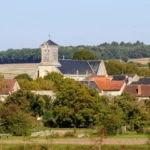
Plumergat, son bourg aux trois clochers, ses villages et ses chapelles se situent le long de chemins et de routes de campagne. Départ : Au départ du kiosque, admirer les « trois clochers » : l’Église Saint-Thuriau qui conserve la nef, les arcades et les chapiteaux sculptés de son origine romane. À droite de la porte sud se trouve l’unique stèle bretonne (Ier siècle) portant des inscriptions gauloises. Le texte en capitales romaines se compose de six mots gaulois traduits ainsi : « Vabros a dressé (ceci) aux Pères de la borne (ou du pays) pour Giapos fils de Durnos ». À proximité, la Chapelle de La Trinité, datée du XVe siècle, est un bel exemple du style flamboyant, aussi nommé gothique tardif. Elle abrite de nombreuses statues provenant d’autres édifices. Ses larmiers et sablières foisonnent de sculptures profanes : animaux, personnages et monstres fantastiques. Ouverte de juillet à septembre. Enfin, la Chapelle Saint-Servais aurait été construite par un riche paysan local suite à un pèlerinage au tombeau du Saint à Maastricht en Hollande. Opposé à la construction, le recteur Louis Le Gras s’y résigna après avoir miraculeusement échappé à un accident de cheval. Son nom figure sur une sablière. Prendre la rue des trois clochers jusqu’au rond-point. Prendre la première sortie direction Sainte-Anne-d’Auray. Tourner ensuite à gauche rue Chaigneau, poursuivre route de Grand-Champ puis sur la D133 sur 400 m environ. Pas à pas : 1) Tourner à droite en direction de Coet Noc puis à droite vers Kervaly. Rejoindre le Moulin de Trongoff (privé). Rejoindre la D17 par Lann Justice. 2) Emprunter la D17 à gauche puis à droite jusqu’à Kermaréchal puis, au carrefour suivant, tourner à gauche vers Locmaria puis Gornevec. Admirer la Chapelle Notre- Dame de Gornevec (XVIe – XIXe – XXe siècles) qui doit son nom à la voie romaine « Hent-Gornevec ». Elle était prospère au XIXe siècle et fréquentée par les nourrices qui venaient y prier pour obtenir un lait abondant. Vers 1920, une partie de la toiture s’est effondrée, et le reste quelques années plus tard. L’association « les Amis de Gornevec », sous l’impulsion de « Breiz Santel », a redonné son aspect d’origine à cette belle chapelle. Le Pardon annuel a lieu le dernier dimanche d’août. 3) Faire demi-tour et rejoindre le bourg par Resto Marvil. 4) À la D133, prendre à droite pour rejoindre le point de départ.
English
Level of difficulty: Easy
Plumergat, its village with three steeples, its villages and its chapels are located along country roads and paths. Departure point: From the kiosk, admire the "three steeples": the Church of Saint-Thuriau, which retains the nave, arcades and sculpted capitals of its Romanesque origins. To the right of the south door is the only Breton stele (1st century) bearing Gallic inscriptions. The text, in Roman capitals, consists of six Gallic words translated as follows: "Vabros erected (this) to the Fathers of the milestone (or country) for Giapos son of Durnos". Nearby, the 15th-century Chapelle de La Trinité is a fine example of the flamboyant style, also known as late Gothic. It houses numerous statues from other buildings. Its dripstones and sablières are packed with secular sculptures: animals, characters and fantastic monsters. Open from July to September. Finally, the Chapelle Saint-Servais is said to have been built by a wealthy local farmer following a pilgrimage to the Saint's tomb in Maastricht, Holland. Opposed to the construction, rector Louis Le Gras resigned to it after miraculously escaping a horse accident. His name appears on a sandpit. Take the rue des trois clochers to the traffic circle. Take the first exit towards Sainte-Anne-d?Auray. Turn left into rue Chaigneau, continue along route de Grand-Champ and then onto the D133 for around 400 m. Step by step : 1) Turn right towards Coet Noc, then right towards Kervaly. Join the Moulin de Trongoff (private). Join the D17 via Lann Justice. 2) Take the D17 left, then right to Kermaréchal. At the next crossroads, turn left to Locmaria, then left to Gornevec. Admire the Chapelle Notre- Dame de Gornevec (16th – 19th – 20th centuries), named after the Roman road "Hent-Gornevec". It was a thriving church in the 19th century, frequented by wet nurses who came here to pray for abundant milk. Around 1920, part of the roof collapsed, and the rest a few years later. The "Friends of Gornevec" association, under the impetus of "Breiz Santel", has restored this beautiful chapel to its original appearance. The annual Pardon takes place on the last Sunday in August. 3) Turn around and return to the village via Resto Marvil. 4) At the D133, turn right to get back to the starting point.
Deutsch
Schwierigkeitsgrad: Leicht
Plumergat, sein Marktflecken mit den drei Glockentürmen, seine Dörfer und Kapellen liegen entlang von Wegen und Landstraßen. Start: Bewundern Sie vom Kiosk aus die "drei Kirchtürme": die Kirche Saint-Thuriau, deren Schiff, Arkaden und geschnitzte Kapitelle noch von ihrem romanischen Ursprung zeugen. Rechts neben dem Südtor befindet sich die einzige bretonische Stele (1. Jahrhundert) mit gallischen Inschriften. Der Text in römischen Großbuchstaben besteht aus sechs gallischen Wörtern, die wie folgt übersetzt werden: "Vabros hat (dies) den Vätern des Grenzsteins (oder des Landes) für Giapos, Sohn des Durnos, aufgerichtet". In der Nähe befindet sich die Kapelle La Trinité aus dem 15. Jahrhundert, ein schönes Beispiel für den Flamboyantstil, der auch als Spätgotik bezeichnet wird. Sie beherbergt zahlreiche Statuen, die aus anderen Gebäuden stammen. Die Traufe und die Sandsteine sind voller weltlicher Skulpturen, darunter Tiere, Figuren und Fantasiemonster. Geöffnet von Juli bis September. Die Kapelle Saint-Servais wurde angeblich von einem reichen Bauern aus der Gegend gebaut, nachdem er zum Grab des Heiligen im holländischen Maastricht gepilgert war. Der Rektor Louis Le Gras, der gegen den Bau war, entschied sich dafür, nachdem er auf wundersame Weise einem Reitunfall entkommen war. Sein Name steht auf einer Sandgrube. Nehmen Sie die Rue des trois clochers bis zum Kreisverkehr. Nehmen Sie die erste Ausfahrt in Richtung Sainte-Anne-d'Auray. Biegen Sie links in die Rue Chaigneau ab, fahren Sie weiter auf der Route de Grand-Champ und dann etwa 400 m auf der D133. Schritt für Schritt : 1) Biegen Sie rechts ab in Richtung Coet Noc und dann rechts in Richtung Kervaly. Gehen Sie zur Moulin de Trongoff (privat). Über Lann Justice auf die D17 gelangen. 2) Nehmen Sie die D17 nach links, dann nach rechts bis Kermaréchal und biegen Sie an der nächsten Kreuzung links nach Locmaria und dann nach Gornevec ab. Bewundern Sie die Kapelle Notre Dame de Gornevec (16. – 19. – 20. Jh.), die ihren Namen der römischen Straße "Hent-Gornevec" verdankt. Jahrhundert wohlhabend und wurde von Ammen besucht, die hier um reichlich Milch beteten. Um 1920 stürzte ein Teil des Daches ein, der Rest einige Jahre später. Der Verein "Les Amis de Gornevec" hat auf Anregung von "Breiz Santel" dieser schönen Kapelle ihr ursprüngliches Aussehen zurückgegeben. Das jährliche Pardon findet am letzten Sonntag im August statt. 3) Kehren Sie um und gehen Sie über Resto Marvil in den Ort. 4) An der D133 biegen Sie rechts ab, um zum Ausgangspunkt zu gelangen.
Dutch
Moeilijkheidsgraad: Gemakkelijk
Plumergat, zijn dorp met drie torens, zijn dorpen en zijn kapellen liggen langs landweggetjes en wegen. Vertrekpunt: Bewonder vanaf de kiosk de "drie torens": de kerk Saint-Thuriau, die het schip, de arcades en de gebeeldhouwde kapitelen van haar romaanse oorsprong heeft behouden. Rechts van de zuidelijke deur staat de enige Bretonse stele (1e eeuw) met Gallische inscripties. De tekst in Romeinse kapitalen bestaat uit zes Gallische woorden die als volgt vertaald kunnen worden: "Vabros richtte (dit) op voor de Vaders van de mijlpaal (of het land) voor Giapos zoon van Durnos". Vlakbij staat de 15e-eeuwse Chapelle de La Trinité, een mooi voorbeeld van de flamboyante stijl, ook bekend als laatgotisch. Het herbergt talrijke beelden uit andere gebouwen. De druipstenen en sablières staan vol wereldlijke beelden: dieren, personages en fantastische monsters. Geopend van juli tot september. De Chapelle Saint-Servais zou zijn gebouwd door een rijke boer na een pelgrimstocht naar het graf van de heilige in Maastricht. De rector Louis Le Gras, die tegen de bouw was, legde zich erbij neer nadat hij op miraculeuze wijze ontsnapte aan een ongeluk met een paard. Zijn naam staat op een zandbak. Neem de rue des trois clochers tot aan de rotonde. Neem de eerste afslag richting Sainte-Anne-d?Auray. Sla linksaf de rue Chaigneau in, volg de route de Grand-Champ en vervolgens de D133 voor ongeveer 400 m. Stap voor stap: 1) Sla rechtsaf richting Coet Noc en vervolgens rechtsaf richting Kervaly. Neem de Moulin de Trongoff (privé). Neem de D17 via Lann Justice. 2) Neem de D17 links en dan rechts naar Kermaréchal en sla bij het volgende kruispunt linksaf richting Locmaria en vervolgens naar Gornevec. Bewonder de kapel Notre Dame de Gornevec (16e – 19e – 20e eeuw), die zijn naam dankt aan de Romeinse weg "Hent-Gornevec". Het was een bloeiende kerk in de 19e eeuw, bezocht door verpleegsters die hier kwamen bidden om overvloedige melk. Rond 1920 stortte een deel van het dak in en de rest een paar jaar later. De vereniging "Vrienden van Gornevec", onder impuls van "Breiz Santel", heeft deze prachtige kapel in haar oorspronkelijke staat hersteld. Het jaarlijkse Pardon vindt plaats op de laatste zondag van augustus. 3) Maak een U-bocht en keer terug naar het dorp via Resto Marvil. 4) Sla bij de D133 rechtsaf om terug te keren naar het beginpunt.
Español
Nivel de dificultad: Fácil
Plumergat, su pueblo con tres campanarios, sus aldeas y sus capillas se encuentran a lo largo de caminos y carreteras rurales. Punto de partida: Desde el quiosco, admire los "tres campanarios": la iglesia de Saint-Thuriau, que conserva la nave, las arcadas y los capiteles esculpidos de sus orígenes románicos. A la derecha de la puerta sur se encuentra la única estela bretona (siglo I) con inscripciones galas. El texto en mayúsculas romanas consta de seis palabras galas traducidas de la siguiente manera: "Vabros erigió (esto) a los Padres del hito (o país) para Giapos hijo de Durnos". Cerca de allí, la Chapelle de La Trinité, del siglo XV, es un buen ejemplo del estilo flamígero, también conocido como gótico tardío. Alberga numerosas estatuas procedentes de otros edificios. Sus gárgolas y sablières están llenas de esculturas profanas: animales, personajes y monstruos fantásticos. Abierto de julio a septiembre. Por último, se dice que la Chapelle Saint-Servais fue construida por un rico granjero local tras una peregrinación a la tumba del Santo en Maastricht, Holanda. Opuesto a la construcción, el rector Louis Le Gras se resignó a ella tras escapar milagrosamente de un accidente de caballo. Su nombre figura en un arenal. Tome la rue des trois clochers hasta la rotonda. Tome la primera salida hacia Sainte-Anne-d'Auray. Gire a la izquierda por la rue Chaigneau, continúe por la route de Grand-Champ y luego por la D133 durante unos 400 m. Paso a paso: 1) Girar a la derecha hacia Coet Noc, luego a la derecha hacia Kervaly. Incorporarse al Moulin de Trongoff (privado). Incorpórese a la D17 por Lann Justice. 2) Tomar la D17 a la izquierda y luego a la derecha hacia Kermaréchal y, en el siguiente cruce, girar a la izquierda hacia Locmaria y luego Gornevec. Admire la capilla de Notre Dame de Gornevec (siglos XVI – XIX – XX), que debe su nombre a la calzada romana "Hent-Gornevec". Fue una iglesia próspera en el siglo XIX, frecuentada por nodrizas que venían aquí a rezar para obtener leche abundante. Hacia 1920 se derrumbó parte del tejado, y el resto unos años más tarde. La asociación "Amigos de Gornevec", bajo el impulso de "Breiz Santel", ha devuelto a esta hermosa capilla su aspecto original. El Perdón anual tiene lugar el último domingo de agosto. 3) Dé media vuelta y regrese al pueblo por Resto Marvil. 4) En la D133, gire a la derecha para volver al punto de partida.
Italiano
Livello di difficoltà: Facile
Plumergat, il suo villaggio con tre campanili, i suoi villaggi e le sue cappelle si trovano lungo le strade e i sentieri di campagna. Punto di partenza: Dal chiosco, ammirate i "tre campanili": la chiesa di Saint-Thuriau, che conserva la navata, le arcate e i capitelli scolpiti delle sue origini romaniche. A destra della porta sud si trova l'unica stele bretone (I secolo) con iscrizioni galliche. Il testo in lettere maiuscole romane consiste in sei parole galliche tradotte come segue: "Vabros eresse (questa) ai Padri della pietra miliare (o del paese) per Giapos figlio di Durnos". Nelle vicinanze, la Cappella della Trinità, risalente al XV secolo, è un ottimo esempio di stile fiammeggiante, noto anche come tardo gotico. Ospita numerose statue provenienti da altri edifici. I suoi gocciolatoi e sablières sono pieni di sculture profane: animali, personaggi e mostri fantastici. Aperta da luglio a settembre. Infine, si dice che la Chapelle Saint-Servais sia stata costruita da un ricco contadino locale in seguito a un pellegrinaggio alla tomba del Santo a Maastricht, in Olanda. Contrario alla costruzione, il rettore Louis Le Gras si dimise dopo essere miracolosamente scampato a un incidente a cavallo. Il suo nome compare su una buca di sabbia. Percorrere la rue des trois clochers fino alla rotatoria. Prendere la prima uscita in direzione Sainte-Anne-d'Auray. Svoltate a sinistra in rue Chaigneau, proseguite lungo la route de Grand-Champ e poi sulla D133 per circa 400 m. Passo dopo passo: 1) Svoltare a destra verso Coet Noc, poi a destra verso Kervaly. Raggiungere il Moulin de Trongoff (privato). Raggiungere la D17 via Lann Justice. 2) Prendere la D17 a sinistra e poi a destra verso Kermaréchal e, all'incrocio successivo, girare a sinistra verso Locmaria e poi Gornevec. Ammirate la Cappella di Notre Dame de Gornevec (XVI – XIX – XX secolo), che deve il suo nome alla strada romana "Hent-Gornevec". Nel XIX secolo era una chiesa fiorente, frequentata dalle balie che venivano qui a pregare per avere latte in abbondanza. Intorno al 1920 crollò una parte del tetto e il resto qualche anno dopo. L'associazione "Amici di Gornevec", sotto l'impulso di "Breiz Santel", ha riportato questa bella cappella al suo aspetto originale. L'annuale Perdonanza si svolge l'ultima domenica di agosto. 3) Inversione di marcia e rientro in paese passando per Resto Marvil. 4) Alla D133, svoltare a destra per tornare al punto di partenza.
Type:
Distance:
Kiosque en face de la mairie, 56400 Plumergat
Publications similaires :
 Circuit des 3 Clochers – Circuit n°43 – Saint-Gervais-les-Trois-Clochers
  Parcours santé de Saint-Gervais-les-Trois-Clochers – Saint-Gervais-les-Trois-Clochers Église Saint-Gervais-et-Saint-Protais de Saint-Gervais-les-Trois-Clochers – Saint-Gervais-les-Trois-Clochers
  Aire de Pique-Nique, Étang municipal, Neuvy-Deux-Clochers – Neuvy-Deux-Clochers