Paysages de la Blies – Blies-Guersviller
Description
English
Deutsch
Dutch
Español
Italiano
Description
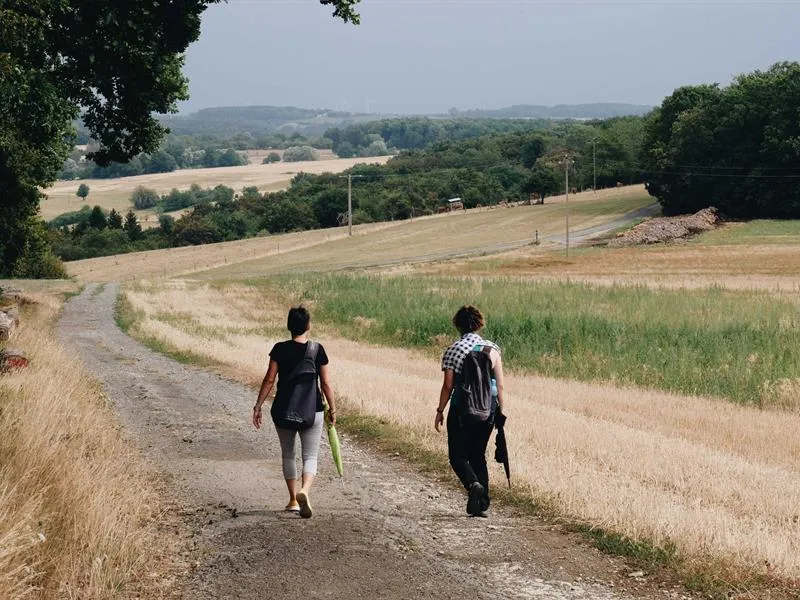
Un panneau d’information sur le circuit est mis en place dès le début de la randonnée. Suivez le balisage avec un anneau jaune dans les deux sens pour vous repérer. Cet itinéraire est surtout consacré à l'observation de la nature. L’arboretum à Blies-Schweyen, au point de départ et d’arrivée de la randonnée, est une belle introduction à la richesse environnementale de la vallée de la Blies. Aménagé sur plus de 4 ha., vos y découvrirez plus de 100 essences végétales typique de la région qui vous permettront de connaître l’écosystème local. Cheminant dans un vaste méandre de la Blies, vous serez surpris par les nombreux points de vue qu’il offre sur des paysages rythmés par les forêts, les vergers et les cultures. Dans les bois du plateau, vous serez entourés majoritairement de hêtres et de chênes mais aussi d'autres espèces un peu plus rares comme l'érable, le charme ou le merisier. Dans la vallée, près de l'arboretum, vous trouverez plutôt des aulnes, des frênes et des chênes. Amusez-vous à les reconnaitre. Feuilles et écorces vous aideront à les identifier.
English
An information panel on the circuit is set up at the start of the hike. Follow the yellow ring signs in both directions to find your way. This route is mainly devoted to nature observation. The arboretum at Blies-Schweyen, where the hike begins and ends, is a wonderful introduction to the environmental wealth of the Blies valley. Spread over more than 4 hectares, you'll discover more than 100 species of plant typical of the region, giving you an insight into the local ecosystem. Meandering through a vast meander of the Blies, you'll be amazed by the many views it offers over landscapes punctuated by forests, orchards and crops. In the woods on the plateau, you'll be surrounded by beech and oak trees, as well as rarer species such as maple, hornbeam and wild cherry. In the valley, near the arboretum, you'll find alders, ashes and oaks. Have fun recognizing them. Leaves and bark will help you identify them.
Deutsch
Eine Informationstafel über den Rundweg wird gleich zu Beginn der Wanderung aufgestellt. Folgen Sie der Markierung mit einem gelben Ring in beide Richtungen, um sich zu orientieren. Diese Route ist vor allem der Naturbeobachtung gewidmet. Das Arboretum in Blies-Schweyen, am Ausgangs- und Endpunkt der Wanderung, ist eine schöne Einführung in den Umweltreichtum des Blies-Tals. Auf einer Fläche von mehr als 4 ha finden Sie über 100 für die Region typische Pflanzenarten, die Ihnen das lokale Ökosystem näher bringen. Auf dem Weg durch eine weite Schleife der Blies werden Sie von den zahlreichen Aussichtspunkten überrascht sein, die Ihnen einen Blick auf die von Wäldern, Obstgärten und Kulturen geprägte Landschaft bieten. In den Wäldern des Plateaus sind Sie hauptsächlich von Buchen und Eichen umgeben, aber auch von anderen, etwas selteneren Arten wie Ahorn, Hainbuche oder Kirsche. Im Tal, in der Nähe des Arboretums, finden Sie eher Erlen, Eschen und Eichen. Machen Sie sich den Spaß, sie zu erkennen. Blätter und Rinde helfen Ihnen, sie zu identifizieren.
Dutch
Er staat een informatiebord aan het begin van de route. Volg de bordjes met een gele ring in beide richtingen om de weg te vinden. Deze route staat vooral in het teken van natuurwaarneming. Het arboretum van Blies-Schweyen, aan het begin en het einde van de wandeling, is een goede introductie tot de ecologische rijkdom van de Bliesvallei. Verspreid over meer dan 4 hectare ontdek je meer dan 100 plantensoorten die typisch zijn voor de streek en die je een inzicht geven in het lokale ecosysteem. Terwijl je je een weg baant langs een uitgestrekte meander van de Blies, zul je verrast zijn door de vele uitkijkpunten over landschappen die worden onderbroken door bossen, boomgaarden en gewassen. In de bossen op het plateau word je voornamelijk omringd door beuken en eiken, maar ook door andere, iets zeldzamere soorten zoals esdoorn, haagbeuk en wilde kers. In de vallei, bij het arboretum, vind je elzen, essen en eiken. Veel plezier bij het identificeren. Bladeren en schors helpen je om ze te identificeren.
Español
Hay un panel informativo al comienzo de la ruta. Siga las señales con un anillo amarillo en ambas direcciones para encontrar el camino. Esta ruta está dedicada principalmente a la observación de la naturaleza. El arboreto de Blies-Schweyen, al principio y al final del recorrido, es una magnífica introducción a la riqueza medioambiental del valle de Blies. Repartidas en más de 4 hectáreas, descubrirá más de 100 especies de plantas típicas de la región, que le permitirán hacerse una idea del ecosistema local. A lo largo de un extenso meandro del Blies, le sorprenderán los numerosos miradores de los que podrá disfrutar sobre paisajes salpicados de bosques, huertos y cultivos. En los bosques de la meseta, estará rodeado principalmente de hayas y robles, pero también de otras especies algo más raras como el arce, el carpe y el cerezo silvestre. En el valle, cerca del arboreto, encontrarás alisos, fresnos y robles. Diviértete identificándolos. Las hojas y la corteza te ayudarán a identificarlos.
Italiano
All'inizio del percorso si trova un pannello informativo. Seguite i cartelli con l'anello giallo in entrambe le direzioni per trovare la strada. Questo percorso è dedicato principalmente all'osservazione della natura. L'arboreto di Blies-Schweyen, all'inizio e alla fine del percorso, è un'ottima introduzione alla ricchezza ambientale della valle di Blies. Su una superficie di oltre 4 ettari, scoprirete più di 100 specie di piante tipiche della regione, che vi permetteranno di conoscere l'ecosistema locale. Percorrendo un vasto meandro del Blies, sarete sorpresi dai numerosi punti di osservazione su paesaggi punteggiati da boschi, frutteti e coltivazioni. Nei boschi dell'altopiano, sarete circondati soprattutto da faggi e querce, ma anche da altre specie un po' più rare come aceri, carpini e ciliegi selvatici. A valle, vicino all'arboreto, troverete ontani, frassini e querce. Divertitevi a identificarli. Foglie e corteccia vi aiuteranno a identificarli.
Environnement et nature - En bord de fleuve ou rivière - Pédestre
Classement: Itinéraire de promenade et de randonnée, PR
Type: En boucle
Distance: 6900.0
Durée: 90mn
Arboretum, 57200 Blies-Guersviller
Crédits: Marion BOUR - Sarreguemines Tourisme