Visitez Rieupeyroux – Rieupeyroux
Description
English
Deutsch
Dutch
Español
Italiano
Description
Un village de légende…
C'est au point culminant (804m), occupé par la chapelle de Modulance qu'est née une légende. Seuls les vrais Rieupeyrousains la connaissent… la fameuse légende du géant Gargantua.
Une sauveté bénédictine en Ségala
Comme Villeneuve-d'Aveyron et Naucelle, Rieupeyroux a pour origine une sauveté (salvita) datant de l'époque romane. C'est autour d'une église et d'un monastère bénédictin fondés par l'abbaye Saint-Martial de Limoges que le bourg s'est développé.
… construite autour d'un point central
C'est au tout début de la Guerre de Cent Ans que la sauveté est dominée par une enceinte fortifiée, dont le point central est l'église de Saint-Martial. Cette dernière adopte un plan quasiment orthogonal, dont la partie centrale de la trame urbaine est occupée par une place de marché, de dimensions modestes et aménagée sur une pente prononcée.
Un plan spécifique qui deviendra par ailleurs une règle dans les bastides aux 13e et 14e s.
English
Carved into the schism and granite landscapes and set on wide plateaux lies the village of Rieupeyroux, forged by its heritage and legends. It is at the highest point of the village where the Modulance Chapel sits that a legend was born. A legend that only true inhabitants know about but you'll know soon too : the famous Gargantua myth !
Like Villeneuve-d'Aveyron and Naucelle, Rieupeyroux was first a sauveté (salvita) dating from the Romanesque era. The hamlet developed around a church and a Benedictine monastery founded by the abbey Saint-Martial de Limoges.
With the beginning of the Hundred Years war, Rieupeyroux's sauveté was fortified around a central point : the St Martial church. This monument has an almost octogonal map. The central part of the urban frame is occupied by a market square of modest size and installed on a steep hill.
The regular plan of the sauveté and the almost central location of its place announce what will become a rule in the bastides of the 13th and 14th century.
s
Deutsch
Ein Dorf mit einer Legende?
Auf dem höchsten Punkt (804 m), der von der Kapelle von Modulance eingenommen wird, wurde eine Legende geboren. Nur echte Rieupeyrousains kennen sie: die berühmte Legende des Riesen Gargantua.
Eine Benediktinerrettung in der Ségala
Wie Villeneuve-d'Aveyron und Naucelle hat auch Rieupeyroux seinen Ursprung in einer Rettungsstation (salvita) aus der romanischen Zeit. Der Ort entwickelte sich um eine Kirche und ein Benediktinerkloster, die von der Abtei Saint-Martial de Limoges gegründet wurden.
? um einen zentralen Punkt herum gebaut
Zu Beginn des Hundertjährigen Krieges wurde die Sauveté von einer befestigten Stadtmauer beherrscht, deren Mittelpunkt die Kirche Saint-Martial bildete. Die Kirche hat einen nahezu orthogonalen Grundriss, wobei der zentrale Teil des städtischen Rasters von einem Marktplatz eingenommen wird, der bescheidene Ausmaße hat und an einem steilen Hang angelegt wurde.
Dieser spezielle Grundriss wurde im 13. und 14. Jahrhundert in den Bastiden zur Regel.
Dutch
Een dorp met een legende?
Op het hoogste punt (804 m), waar de kapel van Modulance staat, is een legende geboren. Alleen de echte Rieupeyrousains kennen het? de beroemde legende van de reus Gargantua.
Een benedictijns heiligdom in Ségala
Net als Villeneuve-d'Aveyron en Naucelle vindt Rieupeyroux zijn oorsprong in een sauveté (salvita) uit de Romaanse periode. De stad ontstond rond een kerk en een benedictijnenklooster, gesticht door de abdij Saint-Martial in Limoges.
gebouwd rond een centraal punt
Aan het begin van de Honderdjarige Oorlog werd de sauveté gedomineerd door een versterkte ommuring met als middelpunt de kerk Saint-Martial. De kerk heeft een bijna orthogonale plattegrond, waarbij het centrale deel van het stadsraster wordt ingenomen door een marktplein, bescheiden van omvang en gebouwd op een steile helling.
Deze specifieke indeling zou de regel worden in de bastides van de 13e en 14e eeuw.
Español
La zona de Rieupeyroux (rivo petroso), cuyo punto culminante (804 m) está ocupado por la capilla Modulance, en torno a la cual existe una leyenda antigua en la que aparece el gigante Gargantúa, se inscribe en los paisajes pétreos de granito y esquisto del Ségala, donde los grandes altiplanos abiertos quedan interrumpidos por los fondos de los valles por los que serpentean los ríos que alimentan al Viaur y al Aveyron. Como Villeneuve-d'Aveyron y Naucelle, el origen de Rieupeyroux es una salvedad (salvita) que data de la época románica. El burgo se desarrolló espontáneamente en torno a una iglesia y a un monasterio benedictino fundados por el abad Saint-Martial de Limoges en una antigua tierra señorial. La salvedad, cuyos límites quedaron fijados definitivamente por un recinto fortificado construido durante el inicio de la Guerra de los Cien Años, adopta una planta casi ortogonal. La parte central de la trama urbana está ocupada por una plaza de mercado de dimensiones modestas y acondicionada en una pronunciada pendiente. La planta regular de la salvedad y la posición casi céntrica de su plaza dan una idea de lo que acabaría siendo la norma en las bastidas de los siglos XIII y XIV.
Italiano
Un villaggio da leggenda?
È nel punto più alto (804 m), occupato dalla cappella di Modulance, che è nata una leggenda. Solo i veri Rieupeyrousain la conoscono: la famosa leggenda del gigante Gargantua.
Un santuario benedettino a Ségala
Come Villeneuve-d'Aveyron e Naucelle, Rieupeyroux ha le sue origini in una sauveté (salvita) risalente al periodo romanico. La città si è sviluppata attorno a una chiesa e a un monastero benedettino fondato dall'Abbazia di Saint-Martial a Limoges.
costruito intorno a un punto centrale
All'inizio della Guerra dei Cento Anni, la sauveté era dominata da un recinto fortificato, il cui punto centrale era la chiesa di Saint-Martial. La chiesa adotta una pianta quasi ortogonale, con la parte centrale del reticolo urbano occupata da una piazza del mercato, di dimensioni modeste e costruita su un pendio ripido.
Questa specifica disposizione diventerà la regola nelle bastide del XIII e XIV secolo.
A la campagne
, 12240 Rieupeyroux
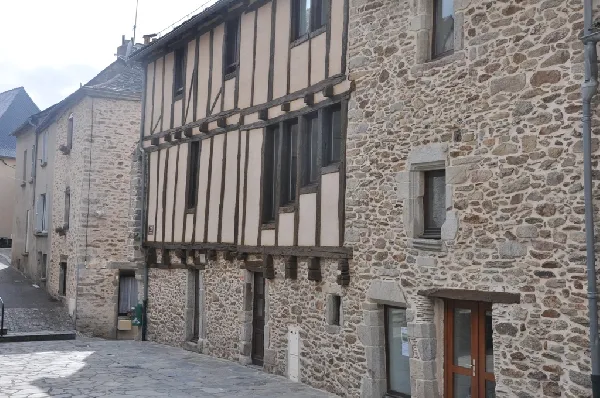
Crédits: SYNDICAT D'INITIATIVE DE LA SALVETAT PEYRALES AVEYRON SEGALA VIAUR
Publications similaires :
 circuit de liaison VTT VAE – Rieupeyroux / La Capelle Bleys – Rieupeyroux
  circuit de liaison VTT VAE – Rieupeyroux / Prévinquières – Rieupeyroux
  Plan d'eau de la Calquière à Rieupeyroux (lâchers de truites- payant) – Rieupeyroux
  Oreilles en Balade Enfant – parcours sonore de Rieupeyroux – Rieupeyroux