Pavillon des Quatre Tours dit du Roy René
Description
English
Deutsch
Dutch
Español
Italiano
Description
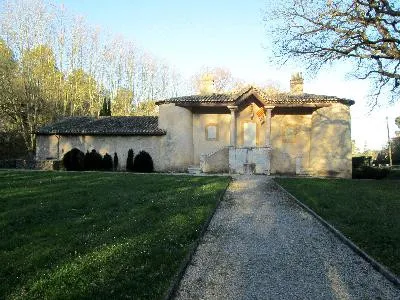
Cette massive construction rurale, improprement appelée pavillon de chasse du Roi René, aurait appartenu à un conseiller du parlement d'Aix, Thomas de Milhaud, à la fin du XVIe s. Ses parties les plus anciennes remonteraient aux années 1580. En face du pavillon, vous apercevrez le château de Gueidan, construit au XVIIème siècle.
Actuellement, le bâtiment est occupé par le Conseil Régional et l'association Forestour.
Visite de l'extérieur du pavillon et de ses jardins uniquement lors des Journées du Patrimoine. Parc du pavillon ouvert au public toute l'année (aires de pique-nique ombragées).
English
This massive rural construction, improperly called King René's hunting lodge, is said to have belonged to an adviser to the parliament of Aix, Thomas de Milhaud, at the end of the 16th century. Its oldest parts date back to the 1580's. Opposite the pavilion, you will see the Château de Gueidan, built in the 17th century.
Currently, the building is occupied by the Regional Council and the Forestour association.
Visit the outside of the pavilion and its gardens only during the Heritage Days. Park of the pavilion open to the public all year round (shaded picnic areas).
Deutsch
Dieses massive ländliche Gebäude, das fälschlicherweise als Jagdpavillon von König René bezeichnet wird, soll Ende des 16. Jahrhunderts einem Berater des Parlaments von Aix, Thomas de Milhaud, gehört haben. Seine ältesten Teile sollen aus den 1580er Jahren stammen. Gegenüber dem Pavillon sehen Sie das Château de Gueidan, das im 17.
Jahrhundert erbaut wurde. Derzeit wird das Gebäude vom Regionalrat und dem Verein Forestour genutzt.
Die Außenseite des Pavillons und seine Gärten können nur an den Tagen des Kulturerbes besichtigt werden. Der Park des Pavillons ist das ganze Jahr über für die Öffentlichkeit zugänglich (schattige Picknickplätze).
Dutch
Dit massieve plattelandsgebouw, dat ten onrechte het jachtslot van koning René wordt genoemd, zou aan het eind van de 16e eeuw hebben toebehoord aan een raadslid van het parlement van Aix, Thomas de Milhaud. De oudste delen van het gebouw dateren uit de jaren 1580. Tegenover het paviljoen ziet u het kasteel van Gueidan, gebouwd in de 17e eeuw.
Het gebouw wordt momenteel gebruikt door de regionale raad en de vereniging Forestour.
De buitenkant van het paviljoen en de tuinen zijn alleen te bezichtigen tijdens de Open Monumentendagen. Het paviljoenpark is het hele jaar open voor het publiek (schaduwrijke picknickplaatsen).
Español
Este macizo edificio rural, impropiamente llamado pabellón de caza del rey René, habría pertenecido a un consejero del Parlamento de Aix, Thomas de Milhaud, a finales del siglo XVI. Las partes más antiguas del edificio datan de la década de 1580. Frente al pabellón, verá el castillo de Gueidan, construido en el siglo XVII.
El edificio está actualmente ocupado por el Consejo Regional y la asociación Forestour.
El exterior del pabellón y sus jardines sólo pueden visitarse durante las Jornadas del Patrimonio. El parque del pabellón está abierto al público todo el año (zonas de picnic a la sombra).
Italiano
Questo massiccio edificio rurale, impropriamente chiamato residenza di caccia di Re René, si dice che sia appartenuto a un consigliere del Parlamento di Aix, Thomas de Milhaud, alla fine del XVI secolo. Le parti più antiche dell'edificio risalgono al 1580. Di fronte al padiglione si trova il castello di Gueidan, costruito nel XVII secolo.
L'edificio è attualmente occupato dal Consiglio regionale e dall'associazione Forestour.
L'esterno del padiglione e i suoi giardini possono essere visitati solo durante le Giornate del Patrimonio. Il parco del padiglione è aperto al pubblico tutto l'anno (aree picnic ombreggiate).
Renaissance
Clientèle: Groupes
Equipements: Aire de pique-nique - Parking à proximité
, 13120 Gardanne