Moulin Roustan
Description
English
Deutsch
Dutch
Español
Italiano
Description
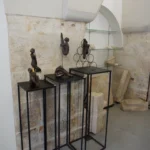
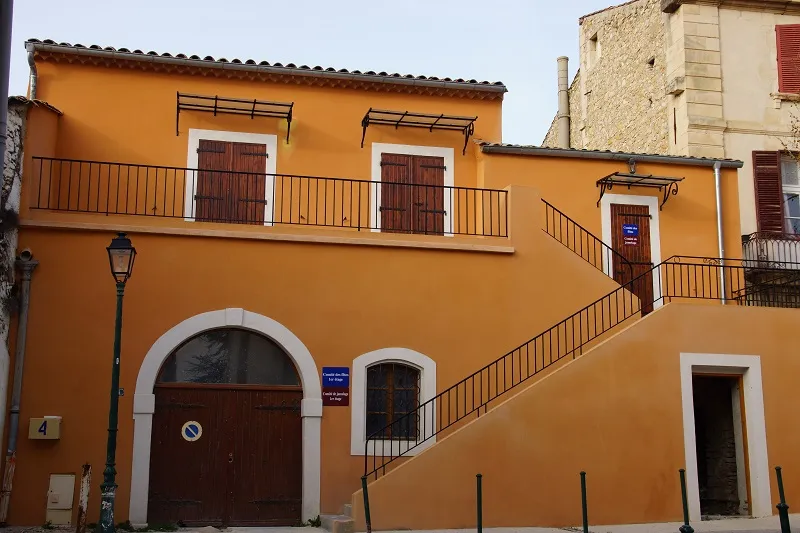
Dès 1640, les habitants plantent de nombreux oliviers à La Fare. Le moulin Roustan sera un des 3 moulins du village. Il est construit par Estienne Ricard en 1760. Il dispose de 2 meules, tractées par la force animale, puis par une machine à vapeur en 1886, et enfin par l'électricité en après la seconde guerre mondiale. L'activité perdure jusqu'en 1956, où le bâtiment est transformé en classe et en chapelle, pendant une dizaine d'année. Le lieu sera finalement restauré entre 2008 et 2017, pour faire revivre l'histoire du moulin, en plus d'une salle d'exposition, d'un point information et le siège de l'Office Municipal de la Culture.
English
As early as 1640, the inhabitants of La Fare planted many olive trees. The Roustan mill was one of the village's 3 mills. Built by Estienne Ricard in 1760, it has 2 millstones, first animal-powered, then steam-powered in 1886, and finally electric after the Second World War. The mill remained in operation until 1956, when the building was converted into a classroom and chapel for ten years. The site was finally restored between 2008 and 2017, to bring the mill's history to life, in addition to an exhibition room, an information point and the headquarters of the Office Municipal de la Culture.
Deutsch
Ab 1640 pflanzten die Einwohner in La Fare zahlreiche Olivenbäume. Die Mühle Roustan wird eine der drei Mühlen des Dorfes. Sie wurde 1760 von Estienne Ricard erbaut und verfügte über zwei Mühlsteine, die von Tierkraft, 1886 von einer Dampfmaschine und nach dem Zweiten Weltkrieg schließlich von Elektrizität angetrieben wurden. Der Betrieb hielt bis 1956 an, als das Gebäude für etwa zehn Jahre in ein Klassenzimmer und eine Kapelle umgewandelt wurde. Zwischen 2008 und 2017 wurde die Mühle schließlich restauriert, um die Geschichte der Mühle wieder aufleben zu lassen. Außerdem wurde ein Ausstellungsraum, eine Informationsstelle und der Sitz des städtischen Kulturbüros eingerichtet.
Dutch
Al in 1640 plantten de inwoners een groot aantal olijfbomen in La Fare. De molen van Roustan was een van de 3 molens in het dorp. Hij werd gebouwd door Estienne Ricard in 1760 en heeft 2 molenstenen. Eerst werd hij aangedreven door dieren, daarna door stoom in 1886 en uiteindelijk elektrisch na de Tweede Wereldoorlog. De molen bleef in bedrijf tot 1956, toen hij werd omgebouwd tot klaslokaal en kapel voor ongeveer tien jaar. De site werd uiteindelijk gerestaureerd tussen 2008 en 2017, om de geschiedenis van de molen weer tot leven te brengen, naast een tentoonstellingsruimte, een informatiepunt en het hoofdkantoor van het Office Municipal de la Culture.
Español
Ya en 1640, los habitantes plantaron un gran número de olivos en La Fare. El molino Roustan era uno de los 3 molinos del pueblo. Construido por Estienne Ricard en 1760, cuenta con 2 muelas, primero de tracción animal, luego de vapor en 1886 y finalmente eléctrica tras la Segunda Guerra Mundial. El molino estuvo en funcionamiento hasta 1956, año en que se convirtió en aula y capilla durante unos diez años. Finalmente, entre 2008 y 2017 se restauró el emplazamiento para revivir la historia del molino, además de una sala de exposiciones, un punto de información y la sede de la Oficina Municipal de la Cultura.
Italiano
Già nel 1640, gli abitanti piantarono un gran numero di ulivi a La Fare. Il mulino Roustan era uno dei 3 mulini del villaggio. Costruito da Estienne Ricard nel 1760, ha 2 macine, prima alimentate da animali, poi a vapore nel 1886 e infine elettriche dopo la Seconda Guerra Mondiale. Il mulino è rimasto in funzione fino al 1956, quando è stato trasformato in un'aula scolastica e in una cappella per circa dieci anni. Il sito è stato infine restaurato tra il 2008 e il 2017, per riportare in vita la storia del mulino, oltre a una sala espositiva, un punto informativo e la sede dell'Office Municipal de la Culture.
Classement: Vignobles & Découvertes
Equipements: Documentation - plan
4 Impasse Du Moulin, 13580 La Fare-les-Oliviers
Crédits: OMC