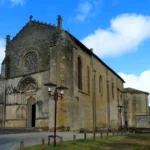
Maison Flous – Saint-Macaire
Description
English
Deutsch
Dutch
Español
Italiano
Description
Maison de marchand "modernisée" au milieu du XVIIème siècle, à partir d'une souche du XIVème siècle.
La structure externe des façades est moderne pour l'époque : boutique au rez-de-chaussée, habitation à l'étage. Son emplacement est idéal au carrefour des principales rues de la ville historique.
L'ensemble des ouvertures, anse de panier au rez-de-chaussée, baies à meneaux à l'étage, est doté d'une riche modérature (moulures de pierre autour des encadrements), ce qui prouve la richesse du marchand Guilhem Flous. D'ailleurs, dès l'année suivant la "modernisation", il décida de lui rajouter un étage supplémentaire.
A l'intérieur, à noter le carrelage d'origine (en terre cuite) complété à l'identique en partie neuve. A l'étage, la cheminée témoigne de la volonté de démonstration sociale de Flou. A noter, les restes de peintures médiévales (faux appareillages à la peinture rouge).
English
Merchant's house "modernized" in the middle of the XVIIth century, from a XIVth century stump.
The external structure of the facades is modern for the time: shop on the ground floor, dwelling on the first floor. Its location is ideal at the crossroads of the main streets of the historic town
The set of openings, basket handle on the ground floor, mullioned bays upstairs, has a rich moderation (stone mouldings around the frames), which proves the wealth of the merchant Guilhem Flous. Moreover, the year after the "modernization", he decided to add an additional floor to it.
Inside, note the original tiling (terracotta) completed identically, partly new. Upstairs, the fireplace is a testimony to Flou's desire to demonstrate his social commitment. Of note are the remains of medieval paintings (fake red paint fittings).
Deutsch
Kaufmannshaus, das Mitte des 17. Jahrhunderts aus einem Stamm aus dem 14. Jahrhundert "modernisiert" wurde.
Die äußere Struktur der Fassaden ist für die damalige Zeit modern: Laden im Erdgeschoss, Wohnhaus im Obergeschoss. Seine Lage ist ideal an der Kreuzung der Hauptstraßen der historischen Stadt
Die Öffnungen – Korbbogen im Erdgeschoss, Sprossenfenster im Obergeschoss – sind mit einer reichen Mäßigung versehen (Steinleisten um die Rahmen), was den Reichtum des Kaufmanns Guilhem Flous belegt. Übrigens beschloss er bereits im Jahr nach der "Modernisierung", das Haus um ein weiteres Stockwerk zu erweitern.
Im Inneren des Hauses sind die ursprünglichen Fliesen (aus Terrakotta) zu erwähnen, die im neuen Teil identisch ergänzt wurden. Im Obergeschoss zeugt der Kamin von Flous Willen zur sozialen Demonstration. Bemerkenswert sind die Reste mittelalterlicher Malereien (falsche Apparaturen
Dutch
Een koopmanshuis dat in het midden van de 17e eeuw werd "gemoderniseerd" op basis van een stronk uit de 14e eeuw.
De externe structuur van de gevels is modern voor zijn tijd: winkel op de begane grond, woning op de eerste verdieping. De ligging is ideaal op het kruispunt van de belangrijkste straten van de historische stad
Alle openingen, korfboogramen op de begane grond en stolpramen op de eerste verdieping, zijn rijkelijk gemodereerd (stenen lijsten rond de kozijnen), wat de rijkdom van de koopman Guilhem Flous bewijst. In feite besloot hij het jaar na de "modernisering" een extra verdieping toe te voegen.
Binnen zijn de originele terracotta vloertegels vervangen door nieuwe. Op de eerste verdieping getuigt de open haard van Flou's verlangen om zijn sociale status te tonen. Let op de resten van de middeleeuwse schilderingen (valse uitlijningen met rode verf).
Español
Casa de un comerciante "modernizada" a mediados del siglo XVII a partir de un tocón del siglo XIV.
La estructura exterior de las fachadas es moderna para su época: tienda en la planta baja, vivienda en el primer piso. Su ubicación es ideal en el cruce de las principales calles de la ciudad histórica
Todas las aberturas, con manivela en la planta baja y ventanas con parteluz en el primer piso, están ricamente moderadas (molduras de piedra alrededor de los marcos), lo que demuestra la riqueza del comerciante Guilhem Flous. De hecho, al año siguiente de la "modernización", decidió añadir un piso más.
En el interior, observe las baldosas de terracota originales, que han sido sustituidas por las nuevas. En el primer piso, la chimenea es testigo del deseo de Flou de demostrar su estatus social. Obsérvense los restos de las pinturas medievales (falsas alineaciones con pintura roja).
Italiano
Casa di un mercante "modernizzata" a metà del XVII secolo da un ceppo del XIV secolo.
La struttura esterna delle facciate è moderna per l'epoca: negozio al piano terra, abitazione al primo piano. La sua posizione è ideale all'incrocio delle vie principali della città storica
Tutte le aperture, le maniglie al piano terra e le bifore al primo piano, sono riccamente moderate (modanature in pietra intorno alle cornici), a riprova della ricchezza del mercante Guilhem Flous. Infatti, l'anno successivo alla "modernizzazione", decise di aggiungere un piano in più.
All'interno, si noti il pavimento originale in cotto, che è stato sostituito da quello nuovo. Al primo piano, il camino testimonia il desiderio di Flou di dimostrare il proprio status sociale. Si notino i resti delle pitture medievali (falsi allineamenti con vernice rossa).
8 rue du canton, 33490 Saint-Macaire