Les Docks de la Joliette – Marseille 2e Arrondissement
Description
English
Deutsch
Dutch
Español
Italiano
Description
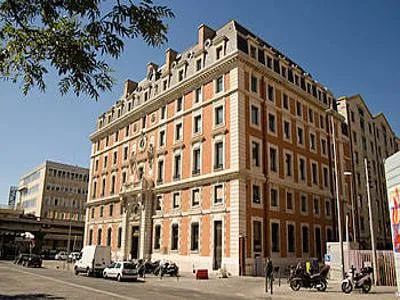
Le plan d'eau du Vieux-Port arrive alors à saturation, notamment en raison de l'apparition des navires à vapeur. En 1842, un projet d'extension du port vers la Joliette est donc entériné. Les travaux en sont achevés dès 1853. A la jonction des voies de terre et des voies de mer, un nouvel outil portuaire se dessine, avec, entre autre, la fondation de la Compagnie des Docks et Entrepôts. Construits par Gustave Desplaces de 1858 à 1863, ces docks se développent sur plus de 400 mètres avec quatre corps de bâtiments d'entrepôts reliés entre eux et terminés par un magnifique hôtel d'administration (de style Louis XIII). Chaque entrepôt s'organise autour d'une cour centrale avec six étages d'espaces de magasins… Comparables à ceux de Londres dont Desplaces s'est sans doute inspiré, ils constituent la réalisation marseillaise du Second Empire la plus moderne et la plus coûteuse après la Nouvelle Major et la Préfecture.
Après une période de quasi abandon, les Docks ont retrouvé leur splendeur grâce à la magistrale réhabilitation de l'architecte Éric Castaldi.
English
This district dates from the beginning of the 19th century, a period of great economic expansion for Marseille and of major urban development. The Old-Port had reached saturation point, due in particular to the arrival of steamships. So in 1842, a project to extend the port to the Joliette area was adopted. Work on the port ended in 1853.
A brand new port facility was built at the meeting of land and sea routes, and the "Compagnie des Docks et Entrepôts" was founded. Building of the docks, which are more than 400 metres long, was directed by Gustave Desplaces from 1858 to 1863. The docks include four groups of warehouse buildings that are connected to each other and end with the company's magnificent administration building (built in a neo- Louis XIII style). Each warehouse has six levels of storage space and is built around a central courtyard. They can be compared to London's docks, which no doubt were a source of inspiration for Desplaces. They are the most modern of Marseille' Second Empire development projects and the most expensive after the Cathedral and the Prefecture.
After a period of almost total neglect, the Docks have been restored to their former splendour thanks to the remarkable rehabilitation project undertaken by architect Eric Castaldi.
Deutsch
Dieses Viertel entstand Anfang des 19. Jahrhunderts, einer Epoche starken wirtschaftlichen Wachstums und großer Städtebaumaßnahmen in Marseille. Die Kapazitäten des Vieux-Port reichten insbesondere aufgrund der aufkommenden Dampfschiffe nicht mehr aus. 1842 wurde die Ausweitung des Hafens in Richtung La Joliette beschlossen. Die Bauarbeiten dauerten bis 1853.
Danach verband die neue Hafenanlage See- und Landwege. Unter anderem wurde auch die Compagnie des Docks et Entrepôts gegründet, deren vier ineinander übergehende Speicherkomplexe sich über mehr als 400 Meter erstrecken und von einem schönen Verwaltungsgebäude (im Stil Ludwig XIII.) abgeschlossen werden. Erbaut wurde die Anlage 1858 – 1863 von Gustave Desplaces. Jeder der sechsstöckigen Speicher ist um einen zentralen Innenhof angelegt, wozu Despleces wahrscheinlich durch die vergleichbaren Anlagen in London inspiriert wurde. Die Docks sind nach der neuen Kathedrale La Major gleichzeitig das modernste und teuerste Vorhaben, das unter dem Second Empire in Marseille realisiert wurde.
Nach einer Periode, in der die Docks so gut wie verlassen waren, erstrahlen sie nach der meisterhaften Sanierung durch den Architekten Éric Castaldi wieder in vollem Glanz.
Dutch
Het waterpeil van de Vieux-Port bereikte toen een verzadiging, vooral door het verschijnen van stoomschepen. In 1842 werd een project goedgekeurd om de haven uit te breiden naar La Joliette. Het werk werd voltooid in 1853. Op het kruispunt van de land- en zeeweg ontstond een nieuwe havenfaciliteit, met onder meer de oprichting van de Compagnie des Docks et Entrepôts. Gebouwd door Gustave Desplaces van 1858 tot 1863, strekken deze dokken zich uit over meer dan 400 meter met vier onderling verbonden pakhuizen, afgewerkt met een prachtig administratief gebouw (in Lodewijk XIII stijl). Elk magazijn is georganiseerd rond een centrale binnenplaats met zes verdiepingen magazijnruimte… Vergelijkbaar met die in Londen, waar Desplaces zich ongetwijfeld door heeft laten inspireren, vormen zij na de Nouvelle Major en de Préfecture de modernste en duurste van alle gebouwen van het Tweede Keizerrijk in Marseille.
Na een periode van bijna totale verwaarlozing zijn de Docks in hun oude glorie hersteld door het meesterlijke herstel van de architect Eric Castaldi.
Español
Este barrio es de principios del siglo XIX, una época marcada en Marsella por un fuerte crecimiento económico y por grandes realizaciones urbanísticas. La ensenada del Vieux-Port se ve saturada, sobre todo debido a la aparición de barcos de vapor. En 1842, se ratifica un proyecto de extensión del puerto hacia la Joliette. Las obras culminan en 1853.
En la confluencia de vías terrestres y marítimas, se desdibuja una nueva herramienta portuaria, con la fundación de la Compañía de los Docks y Almacenes, por ejemplo. Construidos por Gustave Desplaces de 1858 a 1863, estos docks se extienden a lo largo de 400 metros con cuatro bloques de edificios de almacenamiento conectados entre sí, que culminan con un magnífico edificio administrativo (de estilo Luis XIII). Cada almacén se compone de un patio central con seis plantas de zona comercial… Comparables con los de Londres, que seguramente inspiraron a Desplaces, constituyen la obra marsellesa del Segundo Imperio más moderna y más costosa después de la Nouvelle Major y la Prefectura.
Tras un período en el que estuvieron prácticamente abandonados, los Docks han vuelto a recuperar su esplendor gracias a la magistral rehabilitación del arquitecto Éric Castaldi.
Italiano
Tale quartiere risale al XIX secolo, un'epoca segnata a Marsiglia da una forte crescita economica e da grandi opere urbanistiche. La capienza del Vieux Port arrivò infine alla saturazione, soprattutto in ragione della nascita dei battelli a vapore. Nel 1842 venne quindi approvato un progetto di ampliamento del porto verso la Joliette. I lavori vennero ultimati nel 1853.
Nel punto di incontro tra le vie di terra e le vie di mare si disegnò un nuovo strumento portuale caratterizzato, tra l'altro, dalla fondazione della Compagnie des Docks et Entrepôts. Costruiti da Gustave Desplaces tra il 1858 e il 1863, i dock si sviluppano per oltre 400 metri con quattro complessi di magazzini collegati tra loro e completati da una magnifica palazzina di amministrazione (in stile Luigi XIII). Ciascun magazzino è organizzato intorno a un cortile centrale con sei piani di spazi destinati ai negozi … Paragonabili a quelli di Londra, ai quali Desplaces si è sicuramente ispirato, essi rappresentano la realizzazione marsigliese più moderna e più costosa del Secondo Impero dopo la Nouvelle Major e la Prefettura.
Dopo un periodo di abbandono quasi totale, i Dock hanno ritrovato il loro splendore grazie alla magistrale ristrutturazione dell'architetto Éric Castaldi.
Xixe siècle
Equipements: Parking à proximité
10 Place De la Joliette, 13002 Marseille 2e Arrondissement
Crédits: Les Docks de la Joliette façade