Le forum culturel d'Aix-en-Provence
Description
English
Deutsch
Dutch
Español
Italiano
Description
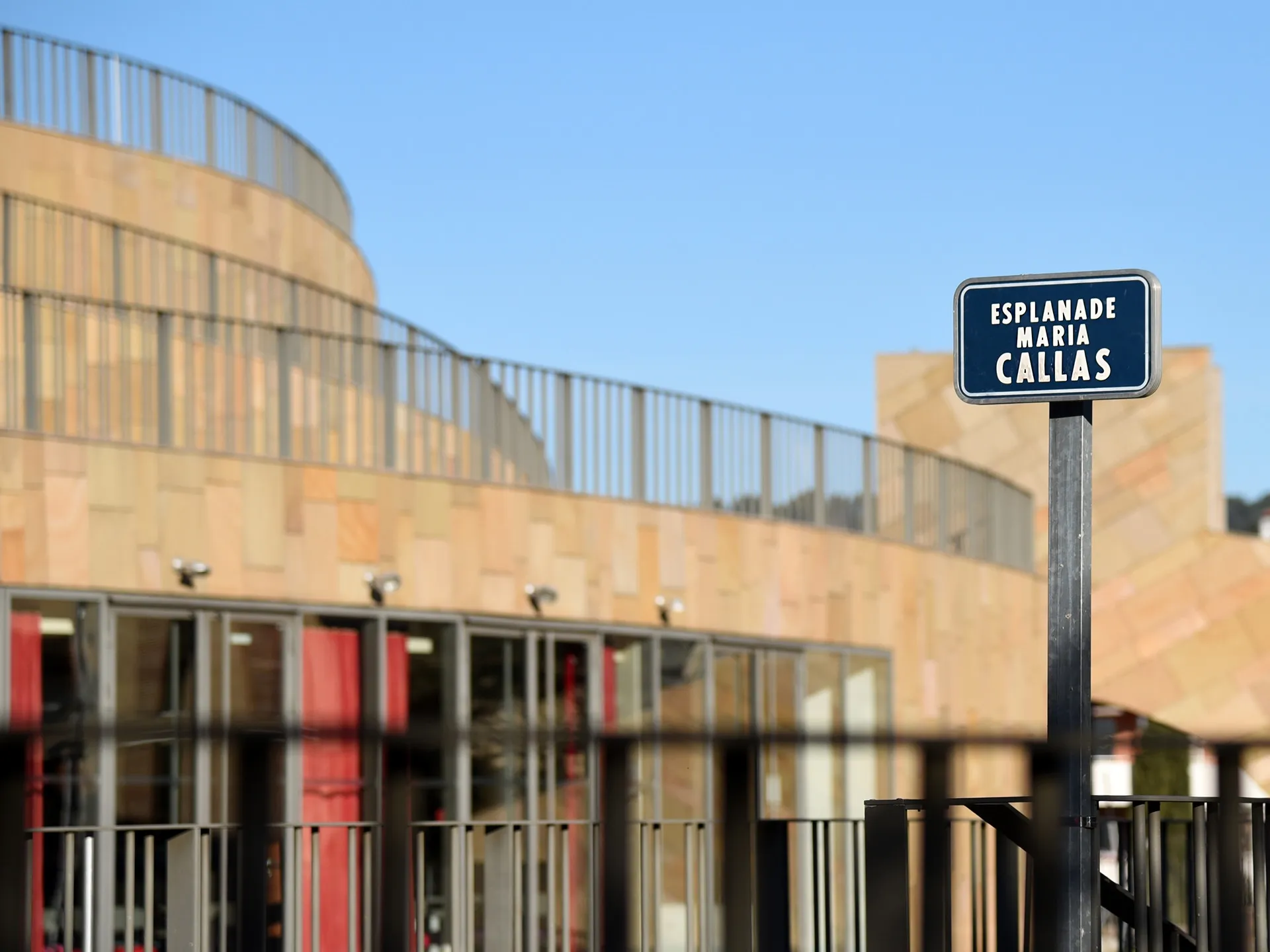
Le Grand Théâtre de Provence (GTP) a été conçu par l'architecte milanais Vittorio Gregotti (inauguré en 2007), qui a souhaité harmoniser l'architecture avec le contexte urbain. L'amphithéâtre peut accueillir 1366 spectateurs. A côté, se trouve le centre chorégraphique national, le Pavillon noir. Il a été conçu par Rudy Ricciotti, architecte français reconnu mondialement et qui a également signé le MUCEM à Marseille. L'architecte a élaboré un cube comportant 4 salles de répétitions et une scène de spectacle. Le Pavillon noir accueille depuis 2006 le Ballet Preljocaj. A quelques mètres du Pavillon noir, le conservatoire Darius Milhaud, imaginé par Kengo Kuma et inauguré en 2013. Cet édifice aux allures d'origami dispose de 62 salles d'enseignement musical, de deux salles d'enseignement d'art dramatique, de quatre studios de danse et d'un auditorium de 500 places. Dans le même périmètre, se trouve la La Cité du livre avec la bibliothèque Méjanes qui contient de nombreux ouvrages littéraires et qui accueille des centaines de visiteurs chaque année. Aux abords immédiats du conservatoire, se trouve le mur d'eau, le plus grand d'Europe avec ses 700m2 de surface, conçu par Christophe Ghion et inauguré en 2014. Sur son versant nord, le mur végétal de Patrick Blanc est constitué de plus de 20 000 plantes. La bibliothèque Méjanes, le conservatoire, ainsi que l'ensemble de l'esplanade Mozart, bénéficient d'une couverture wi-fi gratuite (réseau "Aixmaville").
English
Aix-en-Provence, modern and contemporary with its new cultural forum, an extension of the Provencal Alleys. It offers five major facilities, designed by well-known architects. The Grand Théâtre de Provence (inaugurated in 2007), was designed by the Milanese architect Vittorio Gregotti who wished to harmonize the architecture with the urban context. The amphitheater can accommodate 1366 spectators.
Next to the Grand Theatre (GTP), is the National Choreographic Centre, the Pavillon Noir . It was designed by Rudy Ricciotti French architect worldly known who also signed the MUCEM in Marseille. The architect has developed a cube with four rehearsal rooms and a stage. Since 2006, Pavilion Noir hosts the Ballet Preljocaj.
Down the street, you will find the Conservatory Darius Milhaud, designed by Kengo Kuma and inaugurated in 2013. This building looks like the Origami, it has 62 rooms of music education, two drama classrooms, four dance studios and a 500-seat auditorium. In the same area, is the Méjanes Library that contains many literary works. In the immediate vicinity of the conservatory, is the water wall inaugurated in 2014. Designed by Christophe Ghion, it is the largest in Europe with its 700m2. On its northern slope, the green wall of Patrick Blanc consists of more than 20 000 plants. Free wi-fi coverage in this area ("Aixmaville" network).
Deutsch
Das Grand Théâtre de Provence (GTP) wurde von dem Mailänder Architekten Vittorio Gregotti entworfen (Eröffnung 2007), der die Architektur mit dem städtischen Kontext in Einklang bringen wollte. Das Amphitheater bietet 1366 Zuschauern Platz. Daneben befindet sich das nationale Choreografiezentrum, der schwarze Pavillon. Es wurde von Rudy Ricciotti entworfen, einem weltweit anerkannten französischen Architekten, der auch für das MUCEM in Marseille verantwortlich zeichnet. Der Architekt entwarf einen Würfel mit vier Proberäumen und einer Bühne für Aufführungen. Der Pavillon noir beherbergt seit 2006 das Ballett Preljocaj. Nur wenige Meter vom Pavillon noir entfernt befindet sich das Konservatorium Darius Milhaud, das von Kengo Kuma entworfen und 2013 eingeweiht wurde. Das Origami-ähnliche Gebäude verfügt über 62 Räume für Musikunterricht, zwei Räume für Schauspielunterricht, vier Tanzstudios und ein Auditorium mit 500 Plätzen. Im selben Umkreis befindet sich die La Cité du livre mit der Bibliothek Méjanes, die zahlreiche literarische Werke enthält und jedes Jahr Hunderte von Besuchern empfängt. In der unmittelbaren Umgebung des Konservatoriums befindet sich die Wasserwand, die mit einer Fläche von 700 m2 die größte Europas ist, von Christophe Ghion entworfen und 2014 eingeweiht wurde. An ihrem Nordhang besteht die Pflanzenwand von Patrick Blanc aus mehr als 20.000 Pflanzen. Die Bibliothek Méjanes, das Konservatorium sowie die gesamte Esplanade Mozart profitieren von einer kostenlosen Wi-Fi-Abdeckung (Netz "Aixmaville").
Dutch
Het Grand Théâtre de Provence (GTP) is ontworpen door de Milanese architect Vittorio Gregotti (ingehuldigd in 2007), die de architectuur wilde harmoniseren met de stedelijke context. Het amfitheater biedt plaats aan 1366 toeschouwers. Ernaast ligt het nationale choreografische centrum, het Pavillon noir. Het is ontworpen door Rudy Ricciotti, de internationaal bekende Franse architect die ook het MUCEM in Marseille heeft ontworpen. De architect ontwierp een kubus met vier repetitieruimtes en een podium. Sinds 2006 is het Pavillon noir de thuisbasis van het Ballet Preljocaj. Op enkele meters van het Pavillon noir ligt het Conservatorium Darius Milhaud, ontworpen door Kengo Kuma en ingehuldigd in 2013. Dit origami-achtige gebouw heeft 62 muzieklokalen, twee toneellokalen, vier dansstudio's en een auditorium met 500 plaatsen. In dezelfde wijk bevindt zich de Cité du livre met de Méjanes-bibliotheek, die talrijke literaire werken bevat en elk jaar honderden bezoekers ontvangt. In de directe omgeving van het conservatorium bevindt zich de watermuur, de grootste van Europa met een oppervlakte van 700 m2, ontworpen door Christophe Ghion en ingehuldigd in 2014. Aan de noordzijde bestaat de plantenmuur van Patrick Blanc uit meer dan 20.000 planten. De Méjanes-bibliotheek, het conservatorium en de hele Mozart-esplanade beschikken over gratis wi-fi (netwerk "Aixmaville").
Español
El Gran Teatro de Provenza (GTP) fue diseñado por el arquitecto milanés Vittorio Gregotti (inaugurado en 2007), que quiso armonizar la arquitectura con el contexto urbano. El anfiteatro tiene capacidad para 1366 espectadores. Al lado se encuentra el centro coreográfico nacional, el Pavillon noir. Fue diseñado por Rudy Ricciotti, el arquitecto francés de fama internacional que también diseñó el MUCEM de Marsella. El arquitecto diseñó un cubo con cuatro salas de ensayo y un escenario. Desde 2006, el Pavillon noir alberga el Ballet Preljocaj. A pocos metros del Pavillon noir, el Conservatorio Darius Milhaud, diseñado por Kengo Kuma e inaugurado en 2013. Este edificio con aspecto de origami cuenta con 62 aulas de música, dos aulas de teatro, cuatro estudios de danza y un auditorio de 500 plazas. En la misma zona, se encuentra la Cité du livre con la biblioteca Méjanes, que contiene numerosas obras literarias y acoge a cientos de visitantes cada año. En las inmediaciones del conservatorio se encuentra el muro de agua, el más grande de Europa con sus 700 m2 de superficie, diseñado por Christophe Ghion e inaugurado en 2014. En su parte norte, el muro vegetal de Patrick Blanc está formado por más de 20.000 plantas. La biblioteca de Méjanes, el conservatorio y toda la explanada Mozart se benefician de una cobertura wi-fi gratuita (red "Aixmaville").
Italiano
Il Grand Théâtre de Provence (GTP) è stato progettato dall'architetto milanese Vittorio Gregotti (inaugurato nel 2007), che ha voluto armonizzare l'architettura con il contesto urbano. L'anfiteatro può ospitare 1366 spettatori. Accanto si trova il centro coreografico nazionale, il Pavillon noir. È stato progettato da Rudy Ricciotti, architetto francese di fama internazionale che ha progettato anche il MUCEM di Marsiglia. L'architetto ha progettato un cubo con quattro sale prova e un palco per le esibizioni. Dal 2006, il Pavillon noir ospita il Ballet Preljocaj. A pochi metri dal Pavillon noir, il Conservatorio Darius Milhaud, progettato da Kengo Kuma e inaugurato nel 2013. Questo edificio simile a un origami dispone di 62 aule di musica, due aule di teatro, quattro studi di danza e un auditorium da 500 posti. Nella stessa zona si trova la Cité du livre con la biblioteca Méjanes, che contiene numerose opere letterarie e accoglie centinaia di visitatori ogni anno. Nelle immediate vicinanze del conservatorio si trova il muro d'acqua, il più grande d'Europa con i suoi 700 m2 di superficie, progettato da Christophe Ghion e inaugurato nel 2014. Sul lato nord, la parete vegetale di Patrick Blanc è composta da oltre 20.000 piante. La biblioteca Méjanes, il conservatorio e tutta la spianata Mozart beneficiano di una copertura wi-fi gratuita (rete "Aixmaville").
, 13100 Aix-en-Provence
Crédits: Labo Photo Ville d'Aix-en-Provence