Forges d'Abesse – Saint-Paul-lès-Dax
Description
English
Deutsch
Dutch
Español
Italiano
Description
Le site fut exploité dès le XVIIème siècle par des forgerons venus du Pays Basque. Mais le domaine a connu l'apogée de son activité sidérurgique au XIXème siècle alors que Bertrand Geoffroy en était le co-propriétaire. La forge ferma définitivement en 1901.
English
Used in the 17th century by Basque blacksmiths, this site reached its peak production in the 19th century. Smelting furnaces, created by the main landowner, Bertrand Geoffroy, supplied a sort of cast iron used to make steel sheets for the shipbuilding industry.
It employed 400 people at the time. It finally closed down in 1901 after a few conflicts with the workers. Mr & Mrs Boulart sold the forge to Chappée Industry which settle in Peyrouton, a borough of Dax, until the 70s.
Deutsch
Jahrhundert von Schmieden aus dem Baskenland genutzt wurde. Den Höhepunkt seiner Eisenverarbeitungsaktivitäten erlebte das Anwesen jedoch im 19. Jahrhundert, als Bertrand Geoffroy Miteigentümer war. Die Schmiede wurde 1901 endgültig geschlossen.
Dutch
De site werd al in de 17e eeuw geëxploiteerd door smeden uit Baskenland. De ijzerfabriek van het domein bereikte echter zijn hoogtepunt in de 19e eeuw toen Bertrand Geoffroy mede-eigenaar was. De smederij sloot definitief in 1901.
Español
Usado en el siglo XVII por herreros vascos, este sitio alcanzó su producción máxima en el siglo XIX. Los hornos de fusión, creados por el terrateniente principal, Bertrand Geoffroy, suministraron una especie de hierro de molde solía hacer hojas de acero para la industria de construcción de barcos.
Esto empleó a 400 personas entonces. Esto finalmente se cerró en 1901 después de unos conflictos con los trabajadores. Sr. y Sra Boulart vendieron la forja a la Industria Chappée que se instala en Peyrouton, un distrito municipal de Dax, hasta los años 70.
Italiano
Il sito fu sfruttato già nel XVII secolo da fabbri provenienti dai Paesi Baschi. Tuttavia, l'apice dell'attività della ferriera si ebbe nel XIX secolo, quando Bertrand Geoffroy era comproprietario. La fucina chiuse definitivamente nel 1901.
Artisanat - En forêt
Chemin d'Abesse, 40990 Saint-Paul-lès-Dax
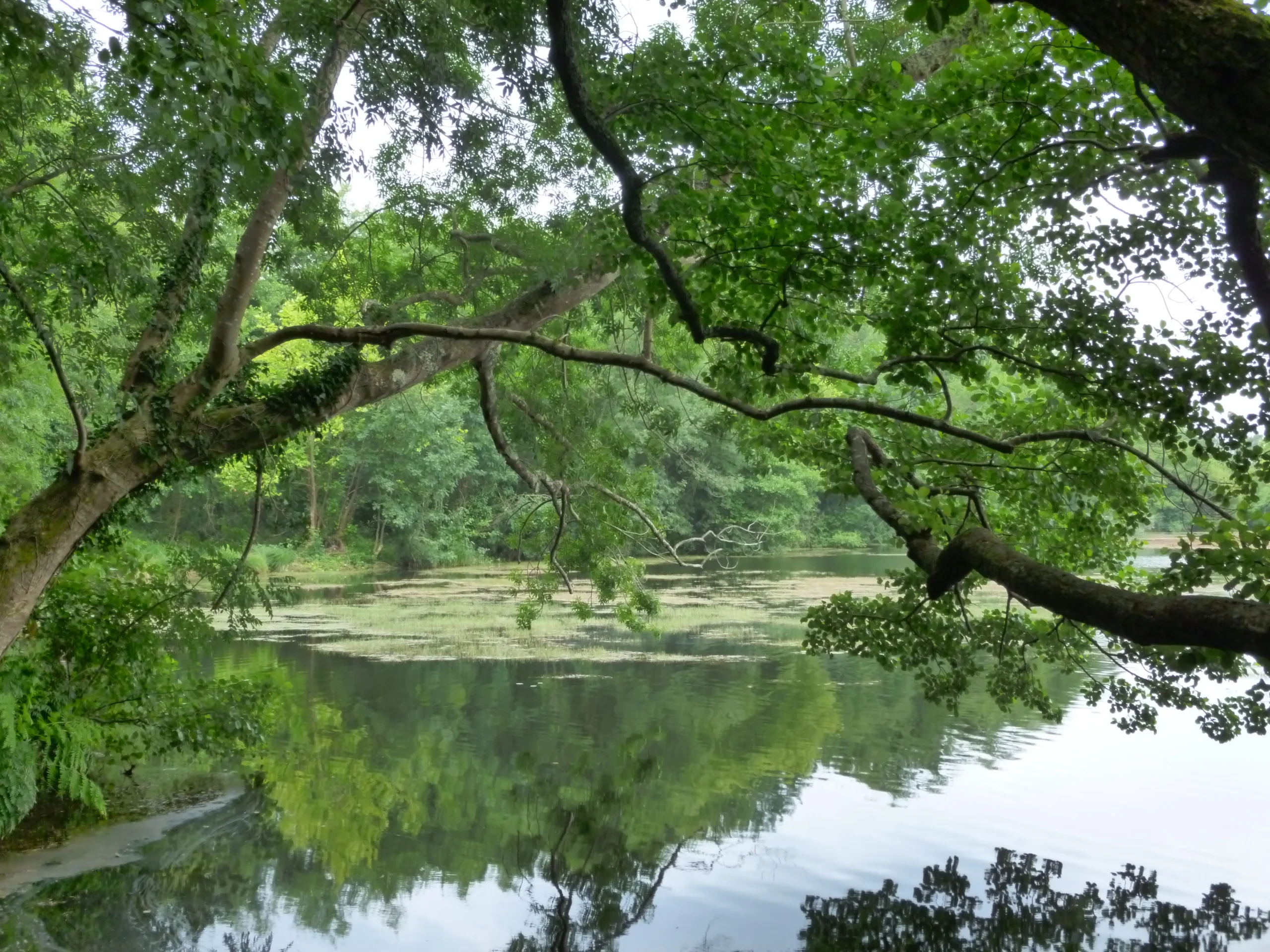
Crédits: Abesse
Licence
Licence
Publications similaires :
 Office Intercommunal de Tourisme et du Thermalisme du Grand Dax – Bureau d'Information Touristique de Saint-Paul-lès-Dax – Saint-Paul-lès-Dax
  Espace Sports Orientation St Paul Les Dax – Lac de Christus – Saint-Paul-lès-Dax
  Espace Sports Orientation St Paul Les Dax – Plaine des Sports – Saint-Paul-lès-Dax
  Forges Hôtel – Domaine de Forges – Forges-les-Eaux