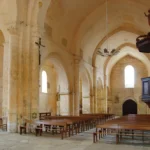
Eglise Saint Maurice – Fegersheim
Description
English
Deutsch
Dutch
Español
Italiano
Description
Cette église de style baroque, construite en 1763, est classée monument historique. Sa façade, symétrique, est surmontée d'un clocher au centre. Une niche au-dessus du portail abrite une statue en grès de saint Maurice en officier romain, de style baroque. A l’intérieur, on peut admirer un très beau groupe statuaire en bois polychrome du XVIe siècle, représentant Le Christ et saint Jean. Reprenant un thème iconographique apparu au début du XVe siècle, ce groupe statuaire développe néanmoins une composition plus tardive, qui préfère à la représentation traditionnelle cette posture assoupie de Saint Jean au pied d'un Christ en majesté, évoquant de façon allégorique l'âme reposant entre les mains souveraines de Dieu. Le retable de la Sainte Croix , datant de la fin du XVIIe siècle, sans doute d'origine suisse, est classé monument historique. Il représente, dans la niche centrale, saint François d'Assise soutenant le Christ.
Le maître-autel, en bois doré et de style rococo tardif, daté de 1780, est classé lui aussi, tout comme l'orgue de tribune, de style empire, oeuvre du facteur Georges Wegman de Strasbourg (1856). Le buffet de sculptures baroques évoque le Cantique des trois enfants.
English
This Baroque-style church, built in 1763, is a listed historic monument. Its symmetrical façade is topped by a central bell tower. A niche above the portal houses a Baroque sandstone statue of Saint Maurice as a Roman officer. Inside, the church features a beautiful 16th-century polychrome wooden statuary group depicting Christ and Saint John. Taking up an iconographic theme that first appeared in the early 15th century, this statuary group nevertheless develops a later composition, preferring to the traditional representation of Saint John in a dozing posture at the foot of a majestic Christ, allegorically evoking the soul resting in the sovereign hands of God. The altarpiece of the Holy Cross, dating from the late 17th century and probably of Swiss origin, is a listed historic monument. In the central niche, it depicts St. Francis of Assisi supporting Christ.
The gilded wooden high altar in late Rococo style, dating from 1780, is also a listed monument, as is the Empire-style gallery organ by Georges Wegman of Strasbourg (1856). The Baroque sculptural case evokes the Song of the Three Children.
Deutsch
Diese Kirche im Barockstil wurde 1763 erbaut und steht unter Denkmalschutz. Ihre symmetrische Fassade wird in der Mitte von einem Glockenturm gekrönt. In einer Nische über dem Portal befindet sich eine barocke Sandsteinstatue des heiligen Mauritius als römischer Offizier. Im Inneren kann man eine sehr schöne Statuengruppe aus polychromem Holz aus dem 16. Jahrhundert bewundern, die Christus und den heiligen Johannes darstellt. Diese Statuengruppe greift ein ikonographisches Thema auf, das Anfang des 15. Jahrhunderts auftauchte, entwickelt jedoch eine spätere Komposition, die der traditionellen Darstellung die schlafende Haltung des Heiligen Johannes zu Füßen eines majestätischen Christus vorzieht, was allegorisch die Seele beschwört, die in den souveränen Händen Gottes ruht. Das Altarbild des Heiligen Kreuzes aus dem späten 17. Jahrhundert, das wahrscheinlich aus der Schweiz stammt, wurde als historisches Monument eingestuft. Es stellt in der zentralen Nische den heiligen Franz von Assisi dar, der Christus stützt.
Der Hochaltar aus vergoldetem Holz im späten Rokoko-Stil aus dem Jahr 1780 steht ebenso unter Denkmalschutz wie die Orgel auf der Empore im Empirestil, ein Werk des Orgelbauers Georges Wegman aus Straßburg (1856). Das Gehäuse mit barocken Skulpturen erinnert an den Lobgesang der drei Kinder.
Dutch
Deze kerk in barokstijl uit 1763 staat op de monumentenlijst. De symmetrische gevel wordt bekroond door een klokkentoren in het midden. In een nis boven het portaal staat een barok zandstenen beeld van de heilige Maurice als Romeins officier. Binnen kun je een prachtige 16e-eeuwse polychrome houten beeldengroep bewonderen die Christus en Sint Jan uitbeeldt. Deze beeldengroep, die een iconografisch thema uit het begin van de 15e eeuw overneemt, heeft echter een latere compositie, waarbij de dommelende houding van de heilige Johannes aan de voet van een majestueuze Christus de voorkeur krijgt boven de traditionele voorstelling, die allegorisch de ziel oproept die rust in de soevereine handen van God. Het altaarstuk van het Heilig Kruis, daterend uit het einde van de 17e eeuw en waarschijnlijk van Zwitserse oorsprong, staat op de monumentenlijst. In de centrale nis stelt het de heilige Franciscus van Assisi voor die Christus ondersteunt.
Het vergulde houten hoogaltaar in late rococostijl uit 1780 is ook een beschermd monument, net als het galerijorgel in Empirestijl van de orgelbouwer Georges Wegman uit Straatsburg (1856). De barokke beeldenkast roept het Lied van de Drie Kinderen op.
Español
Esta iglesia de estilo barroco, construida en 1763, está declarada monumento histórico. Su fachada simétrica está coronada por un campanario en el centro. Una hornacina sobre el portal alberga una estatua barroca de piedra arenisca de San Mauricio como oficial romano. En el interior, se puede admirar un bello grupo estatuario de madera policromada del siglo XVI que representa a Cristo y San Juan. Retomando un tema iconográfico aparecido a principios del siglo XV, este grupo estatuario desarrolla sin embargo una composición posterior, que prefiere la postura adormilada de San Juan a los pies de un Cristo majestuoso a la representación tradicional, evocando alegóricamente el alma que descansa en las manos soberanas de Dios. El retablo de la Santa Cruz, de finales del siglo XVII y probablemente de origen suizo, es un monumento histórico protegido. En el nicho central, representa a San Francisco de Asís sosteniendo a Cristo.
El altar mayor de madera dorada de estilo rococó tardío, que data de 1780, también es un monumento protegido, al igual que el órgano de galería de estilo Imperio, obra del organero de Estrasburgo Georges Wegman (1856). La caja escultórica barroca evoca la Canción de los Tres Niños.
Italiano
Questa chiesa in stile barocco, costruita nel 1763, è un monumento storico classificato. La sua facciata simmetrica è sormontata da un campanile al centro. Una nicchia sopra il portale ospita una statua barocca in arenaria di San Maurizio come ufficiale romano. All'interno si può ammirare un bel gruppo statuario ligneo policromo del XVI secolo che raffigura Cristo e San Giovanni. Riprendendo un tema iconografico apparso all'inizio del XV secolo, questo gruppo statuario sviluppa tuttavia una composizione più tarda, che alla rappresentazione tradizionale preferisce la postura assopita di San Giovanni ai piedi di un maestoso Cristo, evocando allegoricamente l'anima che riposa nelle mani sovrane di Dio. La pala d'altare della Santa Croce, risalente alla fine del XVII secolo e di probabile origine svizzera, è un monumento storico classificato. Nella nicchia centrale è raffigurato San Francesco d'Assisi che sostiene Cristo.
Anche l'altare maggiore in legno dorato in stile tardo rococò, risalente al 1780, è un monumento classificato, così come l'organo a galleria in stile Impero dell'organaro di Strasburgo Georges Wegman (1856). La cassa scultorea barocca evoca il Canto dei Tre Fanciulli.
rue Auguste Ehrhardt, 67640 Fegersheim