Église Saint-Étienne – Loupes
Description
English
Deutsch
Dutch
Español
Italiano
Description
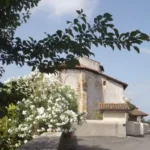
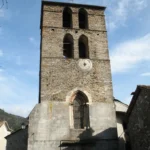
Église de style roman à chevet plat construite au 13e ou 14e siècle. Sacristie accolée à l'est du chevet au 17e siècle. Clocher pignon reposant sur une grande arcade partageant la nef en deux parties bâti en 1764, porte la date. Restauration des parties hautes et construction d'un porche ainsi que d'une nouvelle sacristie au sud de la nef au milieu du 19e siècle.
English
Romanesque church with flat chevet built in the 13th or 14th century. Sacristy attached to the east of the chevet in the 17th century. Gabled bell tower resting on a large arcade dividing the nave into two parts built in 1764, bears the date. Restoration of the upper parts and construction of a porch as well as a new sacristy to the south of the nave in the mid-19th century.
Deutsch
Romanische Kirche mit flachem Kopfende, die im 13. oder 14. Jahrhundert erbaut wurde. Jahrhundert. Die Sakristei wurde im 17. Jahrhundert an die Ostseite des Daches angebaut. Giebelförmiger Glockenturm, der auf einer großen Arkade ruht, die das Kirchenschiff in zwei Teile teilt, 1764 erbaut, trägt das Datum. Restaurierung der oberen Teile und Bau einer Vorhalle sowie einer neuen Sakristei im Süden des Kirchenschiffs Mitte des 19.
Dutch
Romaanse kerk met platte chevet gebouwd in de 13e of 14e eeuw. Sacristie verbonden aan het oosten van de chevet in de 17e eeuw. Op de klokkentoren, die rust op een grote arcade die het schip in twee delen verdeelt, staat het jaartal 1764. Restauratie van de bovenste delen en bouw van een portiek en een nieuwe sacristie ten zuiden van het schip in het midden van de 19e eeuw.
Español
Iglesia románica con cabecera plana construida en los siglos XIII o XIV. Sacristía adosada al este de la cabecera en el siglo XVII. El campanario de dos cuerpos descansa sobre una gran arcada que divide la nave en dos partes, construida en 1764, lleva la fecha. Restauración de las partes superiores y construcción de un porche y una nueva sacristía al sur de la nave a mediados del siglo XIX.
Italiano
Chiesa romanica con chevet piatto costruita nel XIII o XIV secolo. Sacrestia annessa a est del chevet nel XVII secolo. Il campanile a vela poggia su un ampio porticato che divide la navata in due parti, costruito nel 1764, e porta la data. Restauro delle parti superiori e costruzione di un portico e di una nuova sacrestia a sud della navata a metà del XIX secolo.
A la campagne - Dans le village
Equipements: Aire de pique-nique
Chemin de l'Église, 33370 Loupes

Crédits: Entre-deux-Mers Tourisme
Licence
Licence