Église romane Saint-Pierre et Saint-Paul de Grand-Brassac – Grand-Brassac
My Tourisme > Sites Culturels > Église romane Saint-Pierre et Saint-Paul de Grand-Brassac – Grand-Brassac
Description
English
Deutsch
Dutch
Español
Italiano
Description
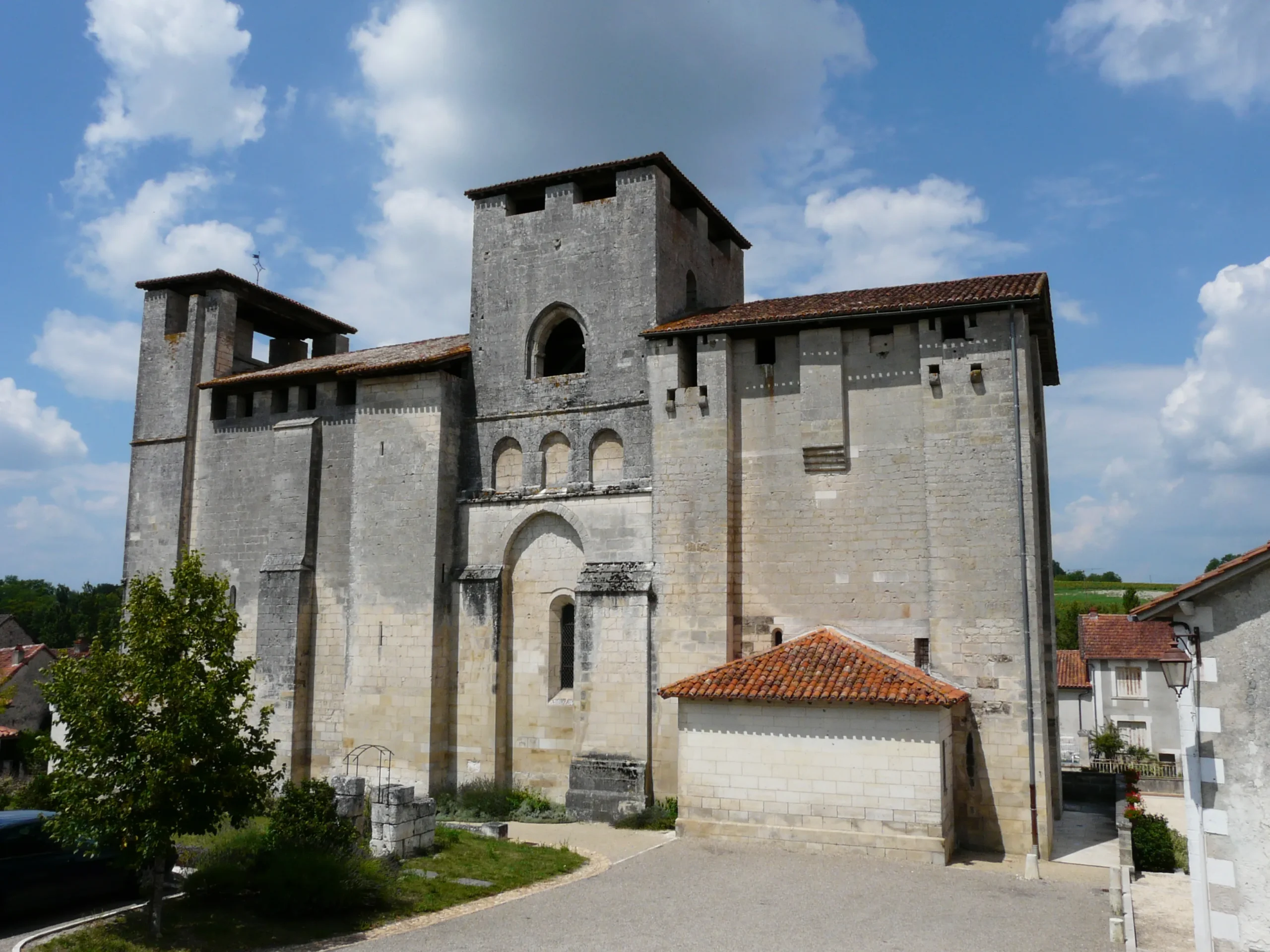
Église forteresse Saint-Pierre et Saint-Paul qui offre une nef voûtée de 3 coupoles sur pendentifs. Fortifiée au 12ème siècle elle propose deux clochers-donjons.
La construction de cette église fortifiée commence vers 1140 et s'achève au XIIIe siècle. Assaillie à plusieurs reprises lors de la guerre de Cent Ans puis lors des guerres de Religion, elle sert de refuge aux habitants sans jamais tomber aux mains de l'ennemi. L'édifice est classé au titre des monuments historiques en 1885.
English
Fortress Church of St Peter and St Paul with a nave vaulted with 3 cupolas on pendentives. Built in the 12th century, fortified in the 13th century, it has two bell towers. North facade with a sculpted portal (adoration of the Magi, five statues from the 16th century).
Deutsch
Festungskirche St. Peter und St. Paul mit einem Kirchenschiff, das von drei Kuppeln mit Zwickeln überwölbt wird. Sie wurde im 12. Jahrhundert erbaut und im 13. Jahrhundert befestigt und verfügt über zwei Glockenturm-Donjons. Nordfassade mit geschnitztem Portal (Anbetung der Heiligen Drei Könige, fünf Statuen aus dem 16.
Dutch
De vestingkerk van Sint-Petrus en Sint-Paulus heeft een gewelfd schip met drie koepels op pendentieven. Gebouwd in de 12e eeuw en versterkt in de 13e eeuw, heeft het twee klokkentorens. De noordgevel heeft een gebeeldhouwd portaal (Aanbidding der Koningen, vijf 16e-eeuwse beelden).
Español
La iglesia fortaleza de San Pedro y San Pablo tiene una nave abovedada con tres cúpulas sobre pechinas. Construida en el siglo XII y fortificada en el siglo XIII, cuenta con dos campanarios. La fachada norte tiene un portal esculpido (Adoración de los Reyes Magos, cinco estatuas del siglo XVI).
Italiano
La chiesa fortezza di Saint-Pierre e Saint-Paul è caratterizzata da una navata voltata con 3 cupole su pennacchi. Fortificata nel XII secolo, ha due campanili.
La costruzione di questa chiesa fortificata iniziò intorno al 1140 e fu completata nel XIII secolo. Attaccata più volte durante la Guerra dei Cento Anni e poi durante le Guerre di Religione, servì da rifugio per gli abitanti senza mai cadere in mani nemiche. L'edificio è stato classificato come monumento storico nel 1885.