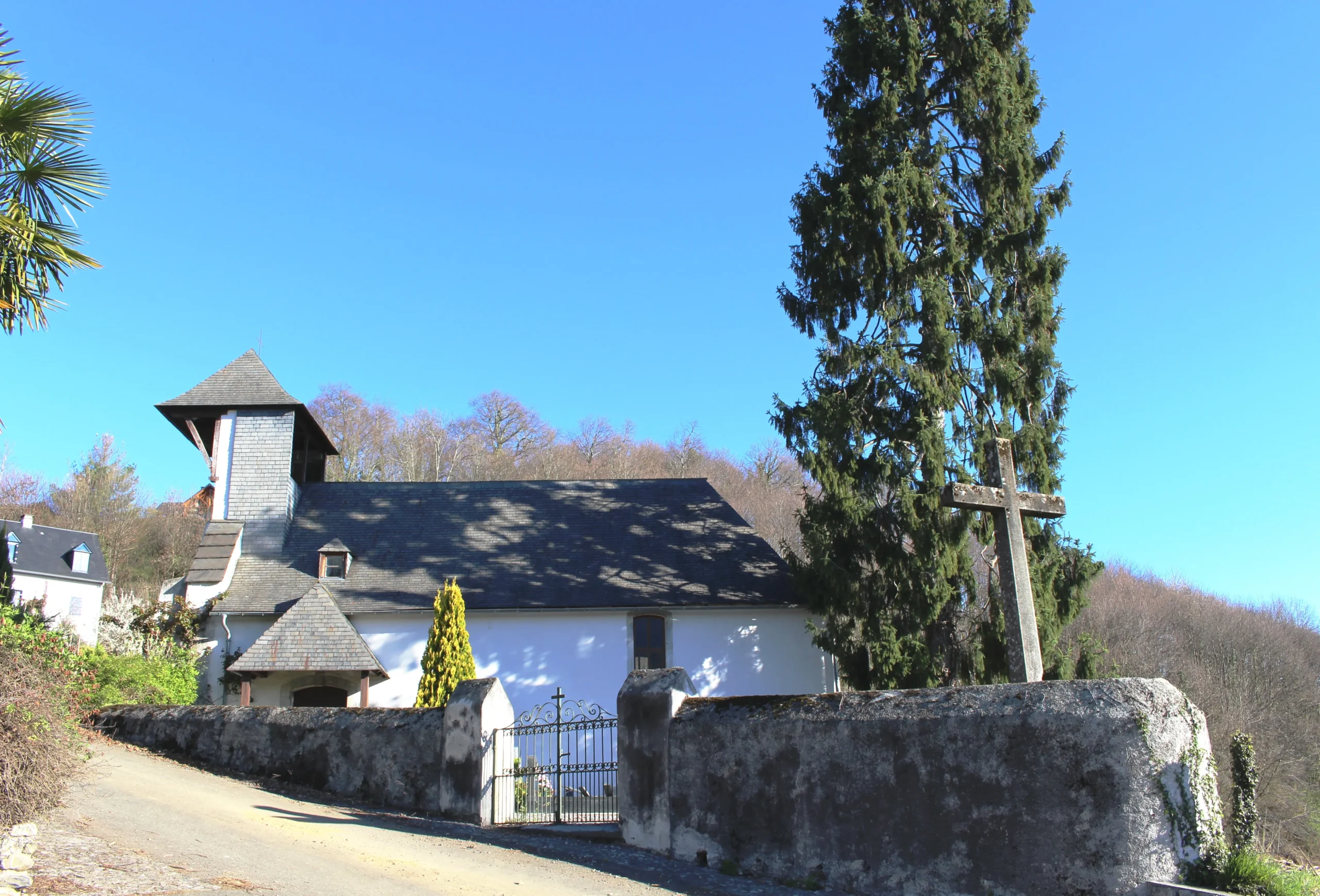
ÉGLISE DE BOURREAC
Description
English
Deutsch
Dutch
Español
Italiano
Description
Dominant le centre du village à l'origine d'un domaine gallo-romain, elle est dédiée à tous les saints, comme l’église de Lézignan. Son clocher-mur reconstruit au XVIIIe siècle, abrite une cloche datée de 1664. Il est dit que c’est la cloche la plus ancienne du patrimoine national qui a échappé à la Révolution. L’excellence de son acoustique en fait un endroit idéal pour les prestations des Chanteurs montagnards de Lourdes.
English
Overlooking the village centre, at the origin of a Gallo-Roman domain, it is dedicated to all the saints, as is the church of Lézignan. Its bell tower-wall rebuilt in the 18th century, houses a bell dated 1664. It is said to be the oldest bell in the national heritage that escaped the Revolution. The excellence of its acoustics makes it an ideal place for the performances of the Mountain Singers of Lourdes.
Deutsch
Sie dominiert das Zentrum des Dorfes, das ursprünglich aus einem gallo-römischen Landgut bestand, und ist wie die Kirche von Lézignan allen Heiligen geweiht. In ihrem im 18. Jahrhundert wieder aufgebauten Glockenturm mit Mauer befindet sich eine Glocke, die auf das Jahr 1664 datiert ist. Es heißt, dass sie die älteste Glocke im nationalen Kulturerbe ist, die der Revolution entgangen ist. Aufgrund ihrer hervorragenden Akustik ist die Glocke ein idealer Ort für Auftritte der Chanteurs montagnards de Lourdes.
Dutch
Ze domineert het centrum van het dorp, oorspronkelijk een Gallo-Romeins landgoed, en is gewijd aan alle heiligen, net als de kerk van Lézignan. De klokkentoren, herbouwd in de 18e eeuw, bevat een klok uit 1664. Er wordt gezegd dat het de oudste klok in het nationale erfgoed is die aan de Revolutie is ontsnapt. Door de uitstekende akoestiek is het een ideale plaats voor optredens van de Chanteurs montagnards de Lourdes.
Español
Dominando el centro del pueblo, originalmente una finca galo-romana, está dedicada a todos los santos, como la iglesia de Lézignan. Su campanario, reconstruido en el siglo XVIII, alberga una campana fechada en 1664. Se dice que es la campana más antigua del patrimonio nacional que escapó a la Revolución. Su excelente acústica lo convierte en un lugar ideal para las actuaciones de los Chanteurs montagnards de Lourdes.
Italiano
Domina il centro del villaggio, originariamente una tenuta gallo-romana, ed è dedicata a tutti i santi, come la chiesa di Lézignan. Il suo campanile a muro, ricostruito nel XVIII secolo, ospita una campana del 1664. Si dice che sia la più antica campana del patrimonio nazionale scampata alla Rivoluzione. La sua eccellente acustica lo rende un luogo ideale per le esibizioni dei Chanteurs montagnards de Lourdes.