Château de Pruniers – Pindray
Description
English
Deutsch
Dutch
Español
Italiano
Description
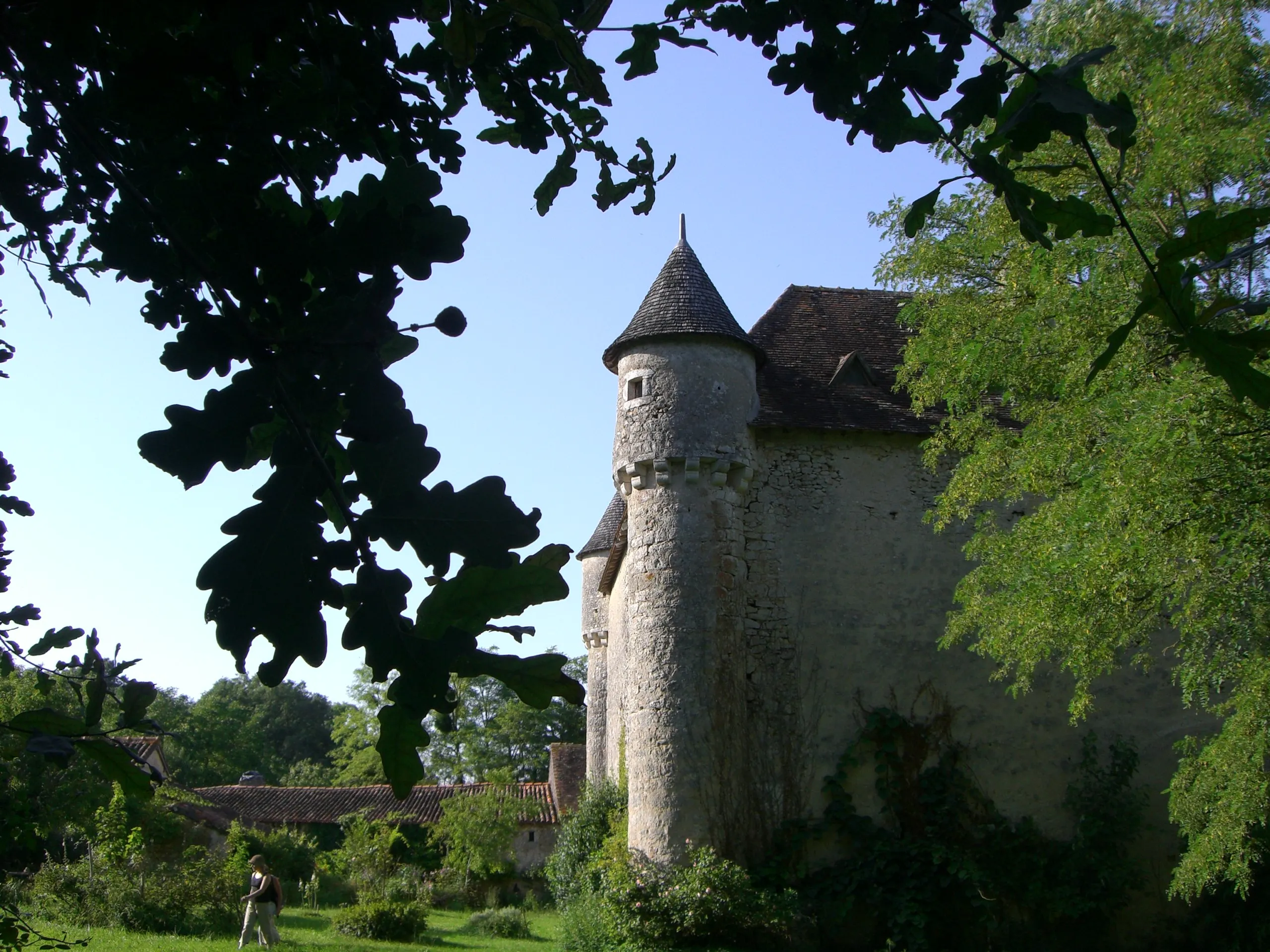
L’occupation du site remonte à l’époque gallo-romaine. Au Moyen Age, le fief relève de Montmorillon et possède le droit de basse, moyenne et haute justice. L’hébergement de Pruniers est cité en 1290, mais l’édifice actuel est le fuit de trois campagnes distinctes, menées du 12ème au 15ème siècle. Dès le 15ème siècle, une enceinte entoure l’édifice. Des communs et une chapelle reconstruite au 19ème siècle complètent l’ensemble. Sa silhouette présente aujourd’hui un volume rectangulaire flanqué aux angles de tourelles pleines.
Inscription aux Monuments Historiques en 1973.
English
The occupation of the site goes back to the Gallo-Roman period. In the Middle Ages, the feud was under the control of Montmorillon and had the right of low, medium and high justice. The lodging of Pruniers is quoted in 1290, but the current building is the result of three distinct campaigns, carried out from the 12th to the 15th century. From the 15th century, an enclosure surrounds the building. The outbuildings and a chapel rebuilt in the 19th century complete the ensemble. Its silhouette today presents a rectangular volume flanked at the corners by full turrets.
Registered as a Historic Monument in 1973.
Deutsch
Die Besiedlung des Ortes geht auf die gallo-römische Zeit zurück. Im Mittelalter unterstand das Lehen Montmorillon und besaß das Recht auf niedrige, mittlere und hohe Justiz. Die Unterkunft in Pruniers wurde 1290 erwähnt, doch das heutige Gebäude ist das Ergebnis von drei verschiedenen Kampagnen, die vom 12. bis zum 15. Jahrhundert durchgeführt wurden. Ab dem 15. Jahrhundert wurde das Gebäude von einer Mauer umgeben. Jahrhundert wiederaufgebaute Kapelle vervollständigen das Ensemble. Die Silhouette des Gebäudes besteht heute aus einem rechteckigen Volumen, das an den Ecken von massiven Türmchen flankiert wird.
Eintragung in die Liste der historischen Monumente im Jahr 1973.
Dutch
De bezetting van het terrein gaat terug tot de Gallo-Romeinse tijd. In de middeleeuwen stond het leengoed onder controle van Montmorillon en had het recht van lage, middelbare en hoge rechtspraak. Het onderkomen van Pruniers wordt vermeld in 1290, maar het huidige gebouw is het resultaat van drie afzonderlijke campagnes, uitgevoerd van de 12e tot de 15e eeuw. Vanaf de 15e eeuw is het gebouw omgeven door een omheining. De bijgebouwen en een in de 19e eeuw herbouwde kapel completeren het geheel. Tegenwoordig is het silhouet rechthoekig en geflankeerd door stevige torentjes op de hoeken.
Geregistreerd als Historisch Monument in 1973.
Español
La ocupación del lugar se remonta a la época galo-romana. En la Edad Media, el feudo estaba bajo el control de Montmorillon y tenía derecho a la justicia baja, media y alta. El alojamiento de Pruniers se menciona en 1290, pero el edificio actual es el resultado de tres campañas distintas, realizadas entre los siglos XII y XV. A partir del siglo XV, un recinto rodea el edificio. Las dependencias y una capilla reconstruida en el siglo XIX completan el conjunto. Hoy, su silueta es rectangular, flanqueada por sólidas torretas en las esquinas.
Fue catalogado como Monumento Histórico en 1973.
Italiano
L'occupazione del sito risale all'epoca gallo-romana. Nel Medioevo, il feudo era sotto il controllo di Montmorillon e aveva il diritto di bassa, media e alta giustizia. L'alloggio di Pruniers è menzionato nel 1290, ma l'edificio attuale è il risultato di tre campagne distinte, realizzate dal XII al XV secolo. A partire dal XV secolo, un recinto circonda l'edificio. Gli annessi e una cappella ricostruita nel XIX secolo completano l'insieme. Oggi la sua silhouette è rettangolare, fiancheggiata da solide torrette agli angoli.
Nel 1973 è stato classificato come monumento storico.
, 86500 Pindray
Crédits: Non communiqué
Licence
Licence