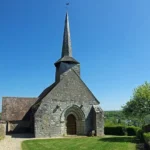
Château de la Prune au Pot – Ceaulmont
Description
English
Deutsch
Dutch
Español
Italiano
Description
Château fort entouré de douves en eau, construit par la famille Pot du XIIe au XVe siècles. Le château, abandonné par les Pot vers le XVe siècle, n'a pas été habité ensuite. Au bord de la ruine, il a été acquis en 2000 par C. et B. Aguttes qui en ont entrepris la restauration. Sans cette intervention, le donjon carré serait maintenant à terre.
English
Fortified lowland château, surrounded by water moats, built by the Pot family from the 13th to the 15th century. The château, abandoned by the Pots around the 15th century, was not inhabited afterwards. On the edge of ruin, it was acquired in 2000 by C. and B. Aguttes who undertook the restoration. Without this intervention, the square keep would now be on the ground.
Deutsch
Von Wassergräben umgebene Burg, die von der Familie Pot vom 12. bis 15. Jahrhundert erbaut wurde. Die Burg wurde von den Pots um das 15. Jahrhundert herum verlassen und danach nicht mehr bewohnt. Da es kurz vor dem Verfall stand, wurde es im Jahr 2000 von C. und B. Aguttes erworben, die mit der Restaurierung begannen. Ohne diesen Eingriff würde der quadratische Bergfried heute am Boden liegen.
Dutch
Een versterkte burcht omgeven door een gracht, gebouwd door de familie Pot van de 12e tot de 15e eeuw. Het kasteel werd rond de 15e eeuw door de familie Pot verlaten en daarna niet meer bewoond. Op de rand van de afgrond, werd het in 2000 aangekocht door C. en B. Aguttes die de restauratie van het kasteel ter hand namen. Aguttes die de restauratie op zich nam. Zonder deze interventie zou de vierkante keep nu op de grond liggen.
Español
Un castillo fortificado rodeado por un foso, construido por la familia Pot del siglo XII al XV. El castillo fue abandonado por la familia Pot hacia el siglo XV y no fue habitado después. Al borde de la ruina, fue adquirido en 2000 por C. y B. Aguttes, que emprendieron la restauración del castillo. Aguttes que se encargó de su restauración. Sin esta intervención, el torreón de la plaza estaría ahora en el suelo.
Italiano
Un castello fortificato circondato da un fossato, costruito dalla famiglia Pot tra il XII e il XV secolo. Il castello fu abbandonato dalla famiglia Pot intorno al XV secolo e non fu più abitato. Sull'orlo della rovina, è stato acquistato nel 2000 da C. e B. Aguttes che hanno intrapreso il restauro del castello. Agutte che ne ha intrapreso il restauro. Senza questo intervento, il torrione quadrato sarebbe ora a terra.
En ville - Bord de lac ou de plan d'eau - Médiéval - En bord de fleuve ou rivière
La Prune, 36200 Ceaulmont

Crédits: © Fabrice Legris-Spelle