Chapelle des Pénitents Noirs – Saint Geniez d'Olt et d'Aubrac
Description
English
Deutsch
Dutch
Español
Italiano
Description
En 1791, la Révolution met un terme au culte, la confrérie disparaît et la chapelle sert de salle d'audience à la nouvelle municipalité, avant d'être cédée à l'hospice voisin en 1805. Quand l'hospice ferme ses portes en 1973, la chapelle est désacralisée et réhabilitée dans les années 1980. L'Office de Tourisme s'y installe en 1994 avant d'être transféré dans le Cloître en 2007. Depuis lors, le bâtiment abrite l'auditorium.
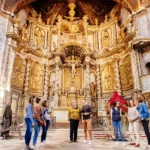
Le plafond en bois entièrement peint, qui fait la richesse de cet édifice, ainsi que le magnifique autel avec son retable du début du XVIIIème siècle, ont été classés Monument Historique en 1979.
Elle est dédiée à Saint Jean Baptiste.
Ouverture lors des visites guidées en juillet et août pour les individuels, toute l'année pour les groupes sur réservation.
English
In 1791, the Revolution put an end to the cult, the brotherhood disappeared and the chapel served as a courtroom for the new municipality, before being ceded to the neighbouring hospice in 1805. When the hospice closed its doors in 1973, the chapel was desecrated and rehabilitated in the 1980s. The Tourist Office moved there in 1994 before being transferred to the Cloister in 2007. Since then, the building has housed the auditorium.
The entirely painted wooden ceiling, which makes the richness of this building, as well as the magnificent altar with its early 18th century altarpiece, were classified as a Historic Monument in 1979
It is dedicated to Saint John the Baptist.
Open during guided tours in July and August for individuals, all year round for groups by reservation.
Deutsch
Im Jahr 1791 beendete die Revolution den Gottesdienst, die Bruderschaft verschwand und die Kapelle diente der neuen Gemeinde als Audienzsaal, bevor sie 1805 an das benachbarte Hospiz abgetreten wurde. Als das Hospiz 1973 geschlossen wurde, wurde die Kapelle entweiht und in den 1980er Jahren rehabilitiert. Das Fremdenverkehrsamt zog 1994 in die Kapelle ein, bevor es 2007 in den Kreuzgang verlegt wurde. Seitdem beherbergt das Gebäude das Auditorium.
Die vollständig bemalte Holzdecke, die den Reichtum dieses Gebäudes ausmacht, sowie der wunderschöne Altar mit seinem Altarbild aus dem frühen 18. Jahrhundert wurden 1979 als historisches Monument eingestuft
Die Kirche ist Johannes dem Täufer geweiht.
Geöffnet während der Führungen im Juli und August für Einzelpersonen, das ganze Jahr über für Gruppen auf Reservierung.
Dutch
In 1791 maakte de Revolutie een einde aan de eredienst, de broederschap verdween en de kapel werd door de nieuwe gemeente gebruikt als rechtszaal, voordat ze in 1805 aan het naburige gasthuis werd geschonken. Toen het hospitium in 1973 zijn deuren sloot, werd de kapel ontwijd en in de jaren tachtig gerestaureerd. Het VVV-kantoor betrok de kapel in 1994 en verhuisde in 2007 naar het klooster. Sindsdien herbergt het gebouw het auditorium.
Het geheel beschilderde houten plafond, dat de rijkdom is van dit gebouw, evenals het prachtige altaar met zijn altaarstuk uit het begin van de 18e eeuw, werden in 1979 geclassificeerd als historische monumenten
Het is gewijd aan Sint Johannes de Doper.
Open voor rondleidingen in juli en augustus voor individuen, het hele jaar door voor groepen op reservering.
Español
En 1791, la Revolución puso fin al culto, la cofradía desapareció y la capilla fue utilizada como sala de justicia por el nuevo municipio, antes de ser cedida al hospicio vecino en 1805. Cuando el hospicio cerró sus puertas en 1973, la capilla fue profanada y restaurada en la década de 1980. La Oficina de Turismo se instaló en la capilla en 1994 antes de ser trasladada al claustro en 2007. Desde entonces, el edificio alberga el auditorio.
El techo de madera totalmente pintado, que constituye la riqueza de este edificio, así como el magnífico altar con su retablo de principios del siglo XVIII, fueron clasificados como Monumentos Históricos en 1979
Está dedicada a San Juan Bautista.
Abierto para visitas guiadas en julio y agosto para particulares, todo el año para grupos con reserva.
Italiano
Nel 1791, la Rivoluzione pose fine al culto, la confraternita scomparve e la cappella fu utilizzata come aula di tribunale dal nuovo comune, prima di essere ceduta al vicino ospizio nel 1805. Quando l'ospizio chiuse i battenti nel 1973, la cappella fu sconsacrata e restaurata negli anni Ottanta. L'Ufficio del Turismo si è trasferito nella cappella nel 1994, prima di essere trasferito nel chiostro nel 2007. Da allora l'edificio ospita l'auditorium.
Il soffitto ligneo interamente dipinto, che costituisce la ricchezza di questo edificio, così come il magnifico altare con la sua pala dell'inizio del XVIII secolo, sono stati classificati come Monumenti storici nel 1979
È dedicata a San Giovanni Battista.
Aperto per visite guidate in luglio e agosto per i singoli, tutto l'anno per i gruppi su prenotazione.
Histoire
St-Geniez-d'Olt, 12130 Saint Geniez d'Olt et d'Aubrac

Crédits: OFFICE DE TOURISME INTERCANTONAL SAINT GENIEZ / CAMPAGNAC