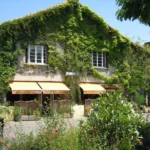
Bastide de Duhort-Bachen – Duhort-Bachen
Description
English
Deutsch
Dutch
Español
Italiano
Description
C'est vers 1340 que fut créée la bastide de DUHORT avec une place centrale sur laquelle trônait une belle halle qui abritait la maison commune, la salle de classe, la cour de justice, mais aussi des cabarets, etc…
La bastide était entourée du ruisseau "L'Ourden", de terrassements faits de mains d'homme et enfermée derrière quatre portes. Les maisons massives étaient bâties autour de la place. Derrière chaque maison on trouvait un jardin.
L'église fut bâtie à l'extrémité sud-est, flanquée du cimetière. De cette bastide très prospère (marchands, notaires, avocats, agriculteurs, etc…), il ne reste que la place sans la halle (la halle a été démolie le 27 novembre 1829). Les matériaux récupérés ont été utilisés pour financer une école pour les garçons.
English
It was around 1340 that the bastide of DUHORT was created with a central square on which stood a beautiful hall that housed the common house, the classroom, the court of justice, but also cabarets, etc…
The bastide was surrounded by the stream "L'Ourden", by earthworks made by human hands and enclosed by four doors. The massive houses were built around the square. Behind each house was a garden.
The church was built at the south-east end, flanked by the cemetery. Of this very prosperous bastide (merchants, notaries, lawyers, farmers, etc.), only the square remains without the market hall (the market hall was demolished on 27 November 1829). The materials recovered were used to finance a school for boys.
Deutsch
Um 1340 wurde die Bastide DUHORT mit einem zentralen Platz gegründet, auf dem eine schöne Halle thronte, in der das Gemeindehaus, das Klassenzimmer, der Gerichtshof, aber auch Kneipen usw. untergebracht waren.
Die Bastide war vom Bach "L'Ourden" umgeben, von Menschenhand aufgeschüttet und hinter vier Toren eingeschlossen. Die massiven Häuser waren um den Platz herum gebaut. Hinter jedem Haus befand sich ein Garten.
Die Kirche wurde am südöstlichen Ende gebaut und vom Friedhof flankiert. Von dieser sehr wohlhabenden Bastide (Kaufleute, Notare, Anwälte, Landwirte usw.) ist nur noch der Platz ohne die Markthalle erhalten (die Markthalle wurde am 27. November 1829 abgerissen). Die geborgenen Materialien wurden verwendet, um eine Schule für Jungen zu finanzieren.
Dutch
Het was rond 1340 dat de bastide van DUHORT ontstond met een centraal plein waarop een prachtige hal stond die het gemeenschappelijk huis, de schoolzaal, het gerechtshof, maar ook cabarets, enz. huisvestte.
De bastide was omgeven door de beek "L'Ourden", door kunstmatige aardwerken en omsloten door vier poorten. De massieve huizen werden rond het plein gebouwd. Achter elk huis was een tuin.
De kerk werd gebouwd aan de zuidoostkant, geflankeerd door het kerkhof. Van deze zeer welvarende bastide (kooplieden, notarissen, advocaten, boeren, enz.) is alleen het plein zonder markthal overgebleven (de markthal werd op 27 november 1829 afgebroken). De gerecupereerde materialen werden gebruikt om een school voor jongens te financieren.
Español
Fue hacia 1340 cuando se creó la bastida de DUHORT con una plaza central sobre la que se levantaba un hermoso salón que albergaba la casa común, el aula escolar, el tribunal de justicia, pero también cabarets, etc.
La bastida estaba rodeada por el arroyo "L'Ourden", por terraplenes hechos por el hombre y cercada por cuatro puertas. Las enormes casas se construyeron alrededor de la plaza. Detrás de cada casa había un jardín.
La iglesia se construyó en el extremo sureste, flanqueada por el cementerio. Lo único que queda de esta próspera bastida (comerciantes, notarios, abogados, agricultores, etc.) es la plaza sin el mercado (el mercado fue demolido el 27 de noviembre de 1829). Los materiales recuperados se utilizaron para financiar una escuela para niños.
Italiano
Fu intorno al 1340 che venne creata la bastide di DUHORT con una piazza centrale su cui sorgeva una bella sala che ospitava la casa comune, l'aula scolastica, la corte di giustizia, ma anche cabaret, ecc…
La bastide era circondata dal torrente "L'Ourden", da sbarramenti artificiali e chiusa da quattro porte. Le case massicce sono state costruite intorno alla piazza. Dietro ogni casa c'era un giardino.
La chiesa fu costruita all'estremità sud-orientale, affiancata dal cimitero. Tutto ciò che rimane di questa prospera bastide (mercanti, notai, avvocati, agricoltori, ecc.) è la piazza senza la sala del mercato (la sala del mercato fu demolita il 27 novembre 1829). I materiali recuperati sono stati utilizzati per finanziare una scuola per ragazzi.