Conférence – Histoire de la plus ancienne maison de Rouhling et des ses habitants – 24-10-2025 – Sarreguemines
My Tourisme > Evénements > Evénements Culturels > Conférence – Histoire de la plus ancienne maison de Rouhling et des ses habitants – 24-10-2025 – Sarreguemines
Description
English
Deutsch
Dutch
Español
Italiano
Description
Conférence animée par Raymond Lehmann. A l'instar de toutes les localités de notre région, Rouhling a connu au fil des siècles des périodes dramatiques faites d'épidémies, d'exterminations, de pillages, de bombardements. Ainsi le village a été successivement construit, détruit et reconstruit.
Parfois des populations venues de loin, déplacées par les exactions militaires, à la recherche d'un toit et d'un lopin de terre à cultiver ont peuplé le village.
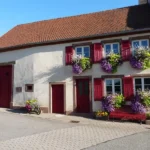
Dans ce contexte perturbé, une maison du 17ème siècle a traversé plus de trois cents ans sans trop souffrir. Transformée en ferme traditionnelle au 19ème siècle, rescapée d'une histoire tourmentée et ayant gardé ses trois rangs caractéristiques : le logis, l'étable et la grange, nous dévoile par son architecture, les traces du passé et par l'histoire de ses occupants une tranche de vie paysanne en Lorraine.
English
Lecture by Raymond Lehmann. Like all the towns in our region, Rouhling has experienced dramatic periods of epidemics, extermination, looting and bombing over the centuries. The village has been successively built, destroyed and rebuilt.
At times, the village was populated by people who had come from afar, displaced by military exactions, in search of a roof over their heads and a plot of land to cultivate.
In this troubled context, a 17th-century house has survived more than three hundred years without suffering too much. Transformed into a traditional farmhouse in the 19th century, this survivor of a tormented history has kept its three characteristic rows: the dwelling, the stable and the barn. Through its architecture, the traces of the past and the history of its occupants, it reveals a slice of peasant life in Lorraine.
Deutsch
Von Raymond Lehmann moderierte Konferenz. Wie alle Orte in unserer Region hat auch Rouhling im Laufe der Jahrhunderte dramatische Zeiten erlebt, die von Epidemien, Ausrottungen, Plünderungen und Bombenangriffen geprägt waren. So wurde das Dorf nacheinander aufgebaut, zerstört und wieder aufgebaut.
Manchmal wurde das Dorf von Menschen bevölkert, die von weit her kamen, durch militärische Übergriffe vertrieben wurden und auf der Suche nach einem Dach über dem Kopf und einem Stück Land zum Anbauen waren.
In diesem unruhigen Umfeld hat ein Haus aus dem 17. Jahrhundert mehr als dreihundert Jahre überstanden, ohne allzu sehr zu leiden. Jahrhundert in einen traditionellen Bauernhof umgewandelt, der eine turbulente Geschichte überstanden und seine drei charakteristischen Reihen – das Wohnhaus, den Stall und die Scheune – bewahrt hat.
Dutch
Lezing door Raymond Lehmann. Net als alle dorpen in onze regio heeft Rouhling door de eeuwen heen dramatische periodes doorgemaakt, met epidemieën, uitroeiingen, plunderingen en bombardementen. Het dorp is achtereenvolgens opgebouwd, verwoest en herbouwd.
Soms bevolkten mensen van ver weg, ontheemd door militaire dwangbevelen, op zoek naar een dak boven hun hoofd en een stuk grond om te bewerken, het dorp.
In deze onrustige context heeft een huis uit de 17e eeuw meer dan driehonderd jaar overleefd zonder al te veel te hebben geleden. In de 19e eeuw omgevormd tot een traditionele boerderij, heeft deze overlevende van een gekwelde geschiedenis zijn drie karakteristieke rijen behouden: de woning, de stal en de schuur. Door zijn architectuur, de sporen van het verleden en de geschiedenis van zijn bewoners, onthult het een stukje van het boerenleven in Lotharingen.
Español
Conferencia de Raymond Lehmann. Como todos los pueblos de nuestra región, Rouhling ha vivido periodos dramáticos a lo largo de los siglos, con epidemias, exterminios, saqueos y bombardeos. El pueblo ha sido sucesivamente construido, destruido y reconstruido.
A veces, gentes venidas de lejos, desplazadas por las exacciones militares, en busca de un techo bajo el que cobijarse y una parcela de tierra que cultivar, han poblado el pueblo.
En este agitado contexto, una casa del siglo XVII ha sobrevivido más de trescientos años sin sufrir demasiado. Transformada en granja tradicional en el siglo XIX, esta superviviente de una historia atormentada ha conservado sus tres hileras características: la vivienda, el establo y el granero. A través de su arquitectura, las huellas del pasado y la historia de sus ocupantes, revela un fragmento de la vida campesina en Lorena.
Italiano
Conferenza di Raymond Lehmann. Come tutti i villaggi della nostra regione, Rouhling ha vissuto periodi drammatici nel corso dei secoli, con epidemie, stermini, saccheggi e bombardamenti. Il villaggio è stato successivamente costruito, distrutto e ricostruito.
Talvolta il villaggio è stato popolato da persone provenienti da lontano, sfollate a causa di esazioni militari, alla ricerca di un tetto sopra la testa e di un appezzamento di terra da coltivare.
In questo contesto travagliato, una casa del XVII secolo è sopravvissuta per più di trecento anni senza soffrire troppo. Trasformata in fattoria tradizionale nel XIX secolo, questa sopravvissuta a una storia tormentata ha conservato le sue tre file caratteristiche: l'abitazione, la stalla e il fienile. Attraverso la sua architettura, le tracce del passato e la storia dei suoi occupanti, rivela uno spaccato della vita contadina in Lorena.
10 rue du Parc, 57200 Sarreguemines

Crédits: Amis de la Maison des Arts et Traditions de Rouhling