Le local à Céramique – Tina Tourneur – Arles
Description
English
Deutsch
Dutch
Español
Italiano
Description
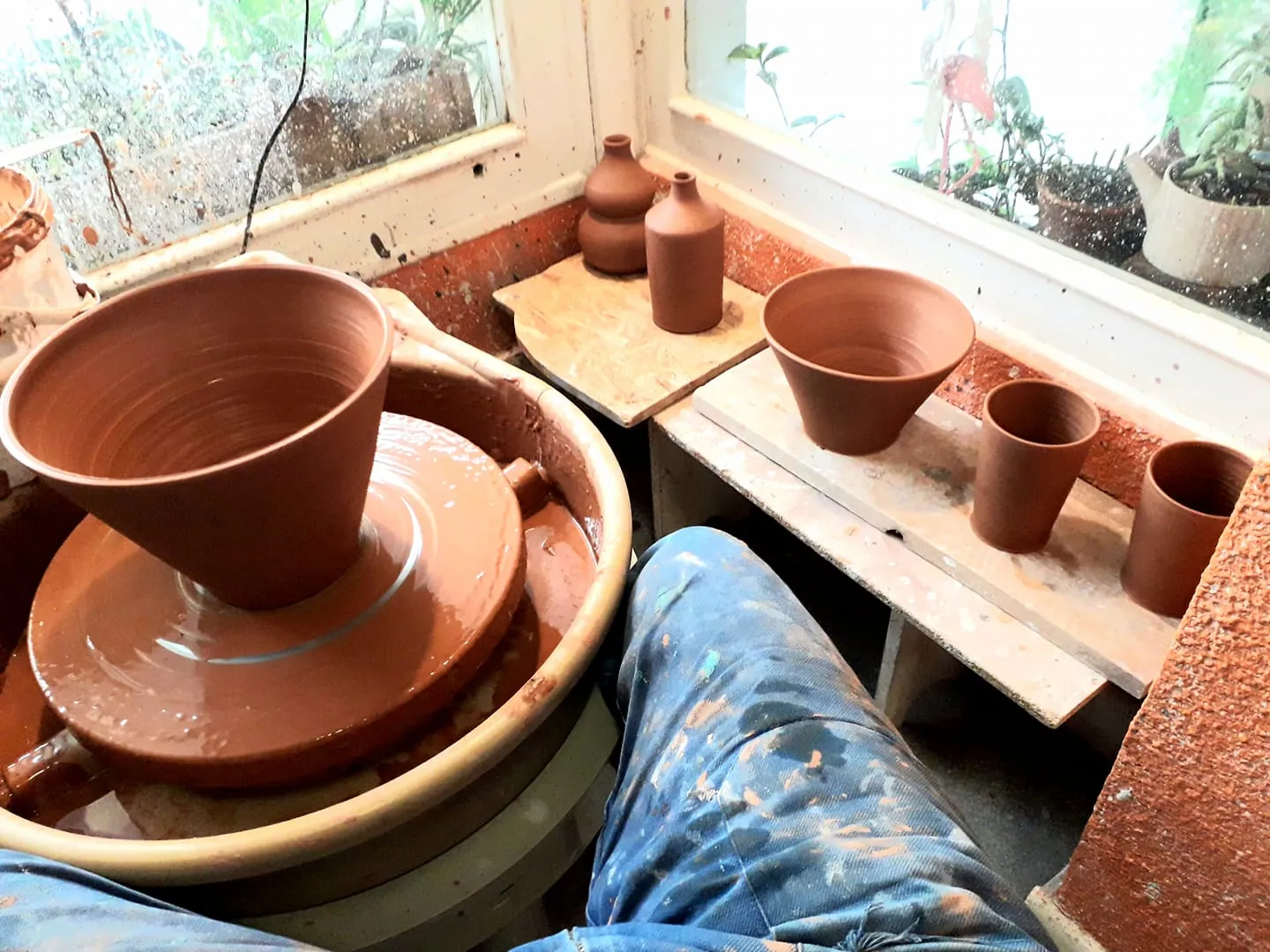
À l’image de la chanteuse qui lui a inspiré ce joli calembour, Tina est énergique, forte et déterminée. La céramiste a ouvert son atelier-boutique il y a quatre ans et y consacre tout son temps lorsqu’elle n’enseigne pas. Après des études aux Beaux-Art et de sociologie, Tina apprend à tourner à Aubagne où elle obtient un CAP et ainsi la mention “artisan d’art”. “Tout l’apprentissage consiste à sentir, ressentir la terre, c’est très long, fastidieux au démarrage”. Empilant quelques bols dont les motifs rappellent une peinture de Vialat sur ses étagères, elle continue “mais il y a quelque chose d'hypnotisant voire de thérapeutique dans cet art de tourner la terre”. Simplicité, gaieté, humour, spontanéité, ce sont les premiers mots qui viennent à l’esprit lorsqu’on contemple les séries de bols, saladiers, tasse ou porte-savon de Tina. Heureuse de profiter de l’effervescence culturelle arlésienne, Tina a développé depuis l’ouverture de son atelier, de nombreuses collections de céramiques usuelles, pratiques au style naïf, coloré et surtout très gaies qui plaisent aux arlésiens tout comme aux touristes désirant rapporter un souvenir Made In Arles dans leurs valises. Tina travaille particulièrement la faïence blanche, une terre poreuse que l’on cuit à basse température, qu’elle émaille par la suite pour l’imperméabiliser. Les décors sont réalisés en suivant la technique d'engobe, c'est-à-dire la pose d’une terre liquide teintée par des oxydes de métaux, par exemple du cuivre, du zinc, du fer… qui servent de pigments. Ces engobes appliquées sur la céramique sont utilisées comme des peintures pour la teinter de différentes couleurs avec des jeux de superpositions.
English
Like the singer who inspired this lovely pun, Tina is energetic, strong and determined. The ceramist opened her workshop-boutique four years ago and devotes all her time to it when she is not teaching. After studying Fine Arts and sociology, Tina learns to turn in Aubagne where she obtains a CAP and thus the mention "craftsman"… "All the learning is to feel, feel the earth, it is very long, tedious at the beginning…. Stacking a few bowls whose motifs recall a painting by Vialat on her shelves, she continues, "but there is something hypnotic, even therapeutic in this art of turning the earth. Simplicity, cheerfulness, humor, spontaneity, these are the first words that come to mind when contemplating Tina's series of bowls, salad bowls, cups or soap dishes. Happy to take advantage of the cultural effervescence of Arles, Tina has developed since the opening of her workshop, numerous collections of usual ceramics, practical in a naive, colorful and above all very cheerful style that appeal to Arlesians as well as to tourists wishing to bring back a souvenir Made In Arles in their suitcases. Tina works particularly with white earthenware, a porous clay that is fired at low temperature, which she then glazes to make it waterproof. The decorations are made following the technique of engobe, that is to say the application of a liquid earth tinted by oxides of metals, for example copper, zinc, iron… which serve as pigments. These engobes applied on the ceramic are used as paints to tint it of various colors with games of superimpositions.
Deutsch
Genau wie die Sängerin, die sie zu diesem schönen Wortspiel inspiriert hat, ist Tina energisch, stark und entschlossen. Die Keramikerin hat vor vier Jahren ihr Atelier mit Laden eröffnet und widmet diesem ihre ganze Zeit, wenn sie nicht gerade unterrichtet. Nach ihrem Studium der Schönen Künste und der Soziologie lernte Tina in Aubagne das Drehen, wo sie ein CAP und damit die Auszeichnung Kunsthandwerkerin erhielt: "Die ganze Ausbildung besteht darin, die Erde zu fühlen, sie zu spüren, das ist sehr langwierig und mühsam am Anfang". Sie stapelt einige Schalen, deren Motive an ein Gemälde von Vialat erinnern, auf ihren Regalen und fährt fort ?aber die Kunst, die Erde zu drehen, hat etwas Hypnotisierendes, ja sogar Therapeutisches an sich? Einfachheit, Fröhlichkeit, Humor und Spontaneität sind die ersten Worte, die einem in den Sinn kommen, wenn man Tinas Serien von Schüsseln, Salatschüsseln, Tassen oder Seifenschalen betrachtet. Tina profitiert von der kulturellen Vielfalt in Arles und hat seit der Eröffnung ihres Ateliers zahlreiche Kollektionen praktischer Gebrauchskeramik in einem naiven, farbenfrohen und vor allem fröhlichen Stil entwickelt, die sowohl Arleser als auch Touristen ansprechen, die ein Souvenir Made in Arles in ihren Koffern mit nach Hause nehmen möchten. Tina arbeitet vor allem mit weißem Steingut, einem porösen Ton, der bei niedriger Temperatur gebrannt wird und den sie anschließend glasiert, um ihn wasserfest zu machen. Die Dekore werden nach der Engobentechnik hergestellt, d. h. es wird eine flüssige Erde aufgetragen, die mit Metalloxiden gefärbt ist, z. B. Kupfer, Zink, Eisen usw., die als Pigmente dienen. Diese auf die Keramik aufgetragenen Engoben werden wie Farben verwendet, um sie mit Überlagerungsspielen in verschiedenen Farben zu färben.
Dutch
Net als de zangeres die deze mooie woordspeling inspireerde, is Tina energiek, sterk en vastberaden. De keramiste opende vier jaar geleden haar atelier-winkel en besteedt er al haar tijd aan als ze geen les geeft. Na haar studies Schone Kunsten en Sociologie leerde Tina draaien in Aubagne waar ze een CAP behaalde en dus de vermelding "artisan d'art". "Het hele leerproces bestaat uit het voelen van de klei, het is heel lang, vervelend in het begin? Ze stapelt een paar kommen op waarvan het ontwerp doet denken aan een schilderij van Vialat en vervolgt: "Maar er is iets hypnotisch, zelfs therapeutisch, in deze kunst van het draaien van de aarde. Eenvoud, vrolijkheid, humor, spontaniteit, dat zijn de eerste woorden die in je opkomen als je naar Tina's serie kommen, slakommen, kopjes of zeepbakjes kijkt. Tina profiteert graag van de culturele bruisendheid van Arles en heeft sinds de opening van haar atelier talrijke collecties praktisch keramiek ontwikkeld in een naïeve, kleurrijke en vooral zeer vrolijke stijl die zowel Arlesen als toeristen aanspreekt die een souvenir Made In Arles in hun koffer willen meenemen. Tina werkt vooral met wit aardewerk, een poreuze klei die op lage temperatuur wordt gebakken en die zij vervolgens glazuurt om het waterdicht te maken. De decoraties worden gemaakt met de "engobe"-techniek, d.w.z. het aanbrengen van een vloeibare klei die gekleurd is met metaaloxiden, zoals koper, zink, ijzer, enz. die als pigment dienen. Deze op de keramiek aangebrachte engobe's worden gebruikt als verf om de keramiek met een spel van verschillende kleuren te kleuren.
Español
Como la cantante que inspiró este bonito juego de palabras, Tina es enérgica, fuerte y decidida. La ceramista abrió su taller-boutique hace cuatro años y le dedica todo su tiempo cuando no está dando clases. Tras estudiar Bellas Artes y Sociología, Tina aprendió a tornear en Aubagne, donde obtuvo el CAP y, por tanto, la mención de "artisan d'art". "Todo el proceso de aprendizaje consiste en sentir la arcilla, es muy largo, tedioso al principio…". Apilando en sus estanterías unos cuencos cuyos diseños recuerdan a un cuadro de Vialat, prosigue, "pero hay algo hipnótico, incluso terapéutico, en este arte de dar vueltas a la tierra. Sencillez, alegría, humor, espontaneidad, son las primeras palabras que vienen a la mente al contemplar las series de cuencos, ensaladeras, tazas o jaboneras de Tina. Feliz de aprovechar la efervescencia cultural de Arlés, Tina ha desarrollado, desde la apertura de su taller, numerosas colecciones de cerámicas prácticas con un estilo ingenuo, colorista y sobre todo muy alegre, que seducen tanto a los arlesianos como a los turistas deseosos de llevarse en la maleta un recuerdo Made In Arlés. Tina trabaja sobre todo con loza blanca, una arcilla porosa cocida a baja temperatura, que luego esmalta para impermeabilizarla. Las decoraciones se realizan mediante la técnica del "engobe", es decir, la aplicación de una arcilla líquida teñida con óxidos metálicos, como cobre, zinc, hierro, etc., que sirven de pigmentos. Estos engobes aplicados a la cerámica se utilizan como pinturas para teñirla de diferentes colores con un juego de superposiciones.
Italiano
Come la cantante che ha ispirato questo simpatico gioco di parole, Tina è energica, forte e determinata. La ceramista ha aperto il suo laboratorio-bottega quattro anni fa e vi dedica tutto il suo tempo quando non insegna. Dopo aver studiato Belle Arti e Sociologia, Tina ha imparato a tornire ad Aubagne, dove ha ottenuto un CAP e quindi la menzione "artisan d'art". "L'intero processo di apprendimento consiste nel tastare l'argilla, è molto lungo, noioso all'inizio? Accatastando sui suoi scaffali alcune ciotole il cui disegno ricorda un quadro di Vialat, continua: "ma c'è qualcosa di ipnotico, persino terapeutico, in quest'arte di trasformare la terra. Semplicità, allegria, umorismo, spontaneità: sono queste le prime parole che vengono in mente contemplando la serie di ciotole, insalatiere, tazze o portasapone di Tina. Felice di approfittare dell'effervescenza culturale di Arles, Tina ha sviluppato, fin dall'apertura del suo laboratorio, numerose collezioni di ceramiche pratiche dallo stile ingenuo, colorato e soprattutto molto allegro, che piacciono sia agli arlesiani sia ai turisti che desiderano portare in valigia un souvenir Made In Arles. Tina lavora in particolare con la terracotta bianca, un'argilla porosa cotta a bassa temperatura, che poi smalta per renderla impermeabile. Le decorazioni sono realizzate con la tecnica dell'"ingobbio", ossia l'applicazione di un'argilla liquida colorata con ossidi metallici, come rame, zinco, ferro, ecc. che fungono da pigmenti. Questi ingobbi applicati alla ceramica vengono utilizzati come vernici per tingerla di diversi colori con un gioco di sovrapposizioni.
4 rue Perriat, 13200 Arles
Crédits: Tina tourneur