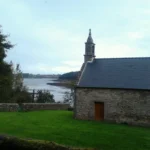
PROMENADE DE SAINT-MAJAN
Description
English
Deutsch
Dutch
Español
Italiano
Description
Un peu d'histoire sur le chemin pour la chapelle : Saint Majan, patron de Lombez arriva dans notre contrée vers l'an 600. C'était un évêque venu d'Antioche, en Turquie, qui s'installa sur le secteur pour défricher et christianiser la région.
On le donne pour un thaumaturge, il guérissait les maladies et rendait la vue aux avegules. Ces miracles furent connus dans toute la contrée vers les années 637.
On raconte qu'un certain jour en descendant de l'oratoire situé sur ce que nous nommons le coteau près du cimetière actuel, notre Majan se trouva en présence d'un dragon qui plongeait notre coin dans la terreur ; il jeta son anneau épiscopal dans la gueule du monstre qui disparut dans le sol d'où surgit alors une fontaine… laquelle fontaine, que vous pouvez voir à gauche en montant vers la chapelle du coteau, est appelée depuis, fontaine de St.Majan…
On dit que le tableau représentant notre Majan dans la Cathédrale aurait été offert par une famille de la contrée, en reconnaissance de la guérison du jeune Adrien de Larroque atteint d'une cécité presque complète, en l'année 1637.
Aujourd'hui le corps de St.Majan repose à Villemagne l'Argentières dans l'Hérault après avoir dérobé en l'an 893 par les moines de St Thibéry.
En 1671, l'évêque Cosme Roger s'attacha à satisfaire les lombéziens en rapatriant des reliques de St Majan (le cubitus et l'auriculaire).
English
A little history on the way to the chapel: Saint Majan, patron saint of Lombez, arrived in our region around the year 600. He was a bishop from Antioch, Turkey, who settled in the area to clear and Christianize the region.
He is said to have been a miracle worker, healing illnesses and restoring sight to blind people. These miracles were known throughout the region around the year 637.
It is said that on a certain day, while descending from the oratory situated on what we call the hillside near the present cemetery, our Majan found himself in the presence of a dragon that was terrorizing our area; he threw his episcopal ring into the mouth of the monster, which disappeared into the ground, from where a fountain then appeared… which fountain, which you can see on the left as you go up to the chapel on the hillside, has since been called the fountain of St.Majan…
It is said that the painting representing our Majan in the Cathedral was offered by a family of the region, in recognition of the cure of the young Adrien de Larroque, who was almost completely blind, in the year 1637.
Today the body of St.Majan rests in Villemagne l'Argentières in the Hérault after having been stolen in 893 by the monks of St.Thibéry.
In 1671, the bishop Cosme Roger endeavoured to satisfy the Lombardy people by repatriating the relics of St Majan (the ulna and the little finger).
Deutsch
Ein wenig Geschichte auf dem Weg zur Kapelle: Saint Majan, der Schutzpatron von Lombez, kam um das Jahr 600 in unsere Gegend. Er war ein Bischof aus Antiochia in der Türkei, der sich hier niederließ, um die Gegend urbar zu machen und zu christianisieren.
Er wurde als Wundertäter verehrt, der Krankheiten heilte und Avegulen das Augenlicht zurückgab. Diese Wunder wurden um das Jahr 637 in der ganzen Gegend bekannt.
Es wird erzählt, dass unser Majan eines Tages, als er vom Oratorium auf dem sogenannten Hügel in der Nähe des heutigen Friedhofs herunterkam, einem Drachen gegenüberstand, der unsere Gegend in Angst und Schrecken versetzte; er warf seinen Bischofsring in das Maul des Ungeheuers, das im Boden verschwand, wo ein Brunnen entstand… Dieser Brunnen, den Sie links sehen können, wenn Sie zur Kapelle auf dem Hügel hinaufgehen, wird seitdem St.-Majans-Brunnen genannt…
Man sagt, dass das Gemälde, das unseren Majan in der Kathedrale darstellt, von einer Familie aus der Gegend als Dank für die Heilung des fast vollständig erblindeten Adrien de Larroque im Jahr 1637 gestiftet wurde.
Heute ruht der Körper von St. Majan in Villemagne l'Argentières im Departement Hérault, nachdem er im Jahr 893 von den Mönchen von St. Thibéry gestohlen worden war.
Im Jahr 1671 bemühte sich Bischof Cosme Roger, die Lombéziens zufrieden zu stellen, indem er die Reliquien des Heiligen Majan (die Elle und den kleinen Finger) zurückführte.
Dutch
Een beetje geschiedenis op weg naar de kapel: Sint Majan, beschermheilige van Lombez, arriveerde in onze streek rond het jaar 600. Hij was een bisschop uit Antiochië, Turkije, die zich in het gebied vestigde om het gebied te zuiveren en te kerstenen.
Hij zou een wonderdoener zijn geweest, die ziekten genas en blinden hun zicht teruggaf. Deze wonderen waren rond het jaar 637 in de hele regio bekend.
Er wordt gezegd dat op een bepaalde dag, toen hij afdaalde van het oratorium op wat wij de heuvel bij het huidige kerkhof noemen, onze Majan zich in de aanwezigheid bevond van een draak die onze streek terroriseerde; hij wierp zijn bisschoppelijke ring in de bek van het monster dat in de grond verdween van waaruit een fontein verscheen… die fontein, die u links ziet als u naar de kapel op de heuvel gaat, wordt sindsdien de fontein van St.Majan genoemd…
Er wordt gezegd dat het schilderij dat onze Majan in de kathedraal voorstelt door een plaatselijke familie werd aangeboden als dank voor de genezing van de jonge Adrien de Larroque, die bijna volledig blind was, in 1637.
Tegenwoordig rust het lichaam van St. Majan in Villemagne l'Argentières in de Hérault, nadat het in 893 was gestolen door de monniken van St. Thibéry.
In 1671 probeerde bisschop Cosme Roger de Lombardijers tevreden te stellen door de relikwieën van de heilige Majan (de ellepijp en de pink) te repatriëren.
Español
Un poco de historia de camino a la capilla: San Majan, patrón de Lombez, llegó a nuestra región hacia el año 600. Era un obispo de Antioquía (Turquía) que se instaló en la zona para limpiarla y cristianizarla.
Se dice que hacía milagros, curaba enfermedades y devolvía la vista a los ciegos. Estos milagros se conocieron en toda la región hacia el año 637.
Se cuenta que cierto día, mientras bajaba del oratorio situado en lo que llamamos la ladera, cerca del actual cementerio, nuestro Majan se encontró en presencia de un dragón que aterrorizaba nuestra región; arrojó su anillo episcopal a la boca del monstruo que desapareció en el suelo de donde surgió una fuente… esta fuente, que se ve a la izquierda subiendo hacia la capilla de la ladera, se llama desde entonces la fuente de San Majan…
Se dice que el cuadro que representa a nuestro Majan en la Catedral fue ofrecido por una familia local en reconocimiento a la curación del joven Adrien de Larroque, casi completamente ciego, en 1637.
En la actualidad, el cuerpo de San Majan descansa en Villemagne l'Argentières, en el Hérault, tras haber sido robado en 893 por los monjes de San Thibéry.
En 1671, el obispo Cosme Roger intentó satisfacer a los lombardos repatriando las reliquias de San Majan (el cúbito y el dedo meñique).
Italiano
Un po' di storia sulla strada per la cappella: San Majan, patrono di Lombez, è arrivato nella nostra regione intorno all'anno 600. Era un vescovo di Antiochia, in Turchia, che si stabilì nella zona per bonificare e cristianizzare la regione.
Si dice che sia stato un operatore miracoloso, che abbia guarito malattie e ridato la vista a persone cieche. Questi miracoli erano noti in tutta la regione intorno all'anno 637.
Si racconta che un certo giorno, mentre scendeva dall'oratorio situato su quella che chiamiamo la collina vicino all'attuale cimitero, il nostro Maiano si trovò al cospetto di un drago che terrorizzava la nostra zona; gettò il suo anello episcopale nella bocca del mostro, che scomparve nel terreno, da cui poi uscì una fontana… questa fontana, che si vede sulla sinistra salendo verso la cappella sulla collina, da allora è stata chiamata fontana di San Maiano…
Si dice che il dipinto che rappresenta il nostro Majan nella Cattedrale sia stato offerto da una famiglia locale come riconoscimento per la guarigione del giovane Adrien de Larroque, quasi completamente cieco, nel 1637.
Oggi il corpo di San Maiano riposa a Villemagne l'Argentières, nell'Hérault, dopo essere stato trafugato nell'893 dai monaci di San Thibéry.
Nel 1671, il vescovo Cosme Roger cercò di accontentare i lombardi rimpatriando le reliquie di San Maiano (l'ulna e il mignolo).
Clientèle: Individuels - Individuels avec adhésion - Marcheurs
Type:
Distance:
10 place de la Cathédrale, 32220 Lombez

Crédits: Collection Tourisme Gers/Office de Tourisme du Savès