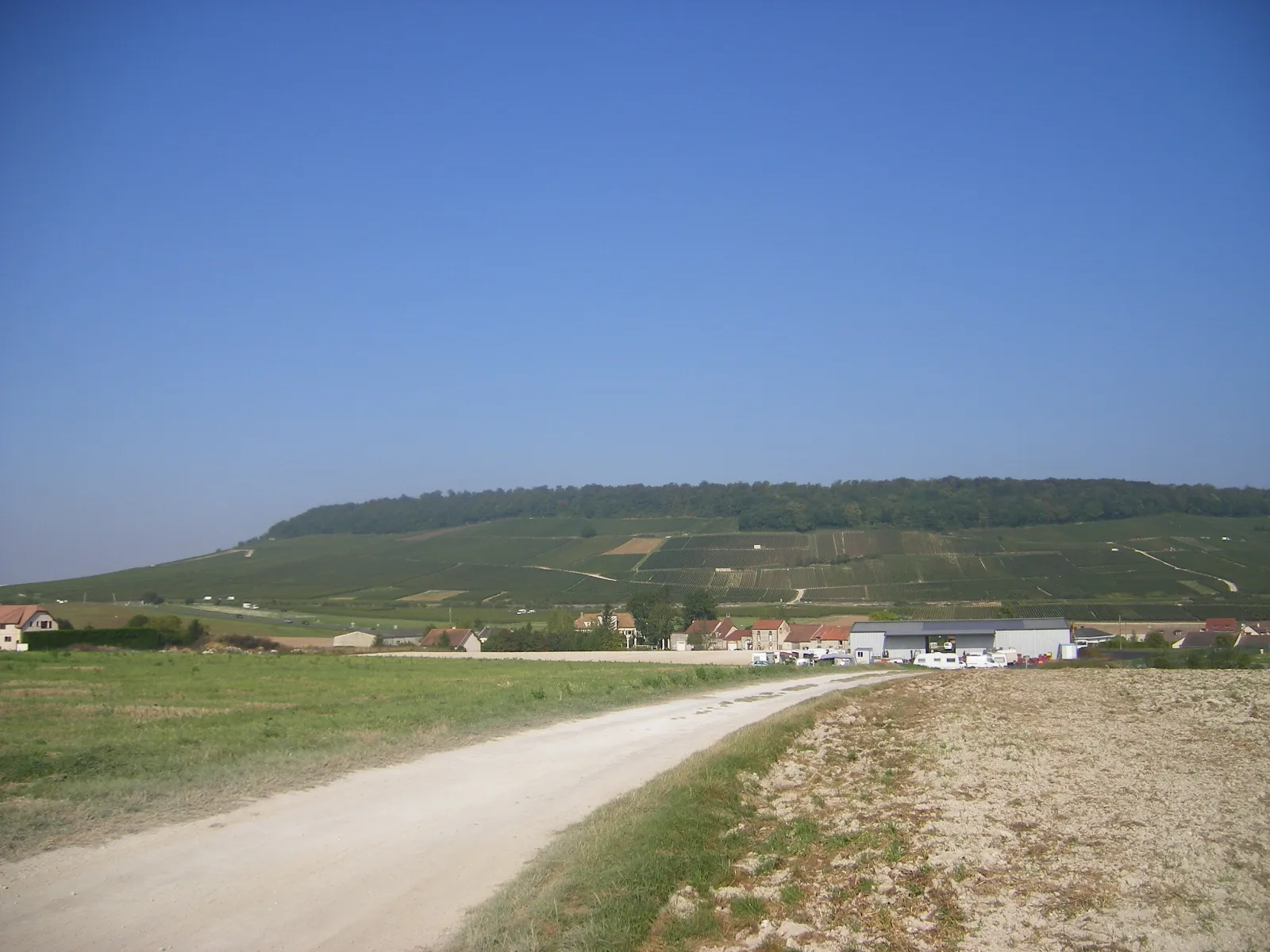
Le Mont Aimé – Bergères-lès-Vertus
Description
English
Deutsch
Dutch
Español
Italiano
Description
Culminant à 240 mètres d’altitude, ce site est historique.
Le Mont-Aimé semble avoir été occupé par l’Homme dès le Néolithique pour devenir ensuite le siège d’un oppidum gaulois. En 1210, la Comtesse Blanche de Navarre, mère de Thibault IV, fit construire le château du Mont-Aimé. Celui-ci est petit à petit démantelé : ses pierres serviront à la construction de maisons dans les villages alentours.
En 1914, le Mont-Aimé se situe au cœur du dispositif de la bataille de la Marne. Aujourd’hui, on trouve sur le Mont-Aimé une table d’orientation, des circuits de promenade et une vue panoramique sur la plaine champenoise.
English
Rising up to 240 metres, this is a historic site.
The Mont-Aimé appears to have been inhabited by man since Neolithic times before becoming the seat of a Gallic settlement. in 1210, Comtesse Blanche de Navarre, the mother of Thibault IV, had the château du Mont-Aimé built. It was gradually dismantled and its stones used in the building of the houses in the surrounding villages.
In 1914, the Mont-Aimé was at the heart of the strategy of the battle of the Marne. Today the Mont-Aimé offers a viewpoint indicator, walking and hiking trails and panoramic views over the Champagne plain.
Deutsch
Mit einer Höhe von 240 m ist dies ein historischer Ort
Mont-Aimé scheint bereits in der Jungsteinzeit von Menschen besiedelt gewesen zu sein und wurde später zum Sitz eines gallischen Oppidums. Im Jahr 1210 ließ die Gräfin Blanche de Navarre, die Mutter von Thibault IV, die Burg Mont-Aimé errichten. Diese wurde nach und nach abgebaut: Ihre Steine wurden für den Bau von Häusern in den umliegenden Dörfern verwendet
Im Jahr 1914 befand sich Mont-Aimé im Zentrum der Schlacht an der Marne Heute findet man auf dem Mont-Aimé eine Orientierungstafel, Wanderwege und einen Panoramablick auf die Ebene der Champagne.
Dutch
Deze site, die op 240 meter hoogte eindigt, is historisch
Mont-Aimé schijnt sinds het neolithicum door mensen bewoond te zijn geweest en werd daarna de zetel van een Gallisch oppidum. In 1210 liet gravin Blanche van Navarra, moeder van Thibault IV, het kasteel van Mont-Aimé bouwen. Deze werd geleidelijk afgebroken: de stenen werden gebruikt om huizen te bouwen in de omliggende dorpen
In 1914 lag Mont-Aimé in het hart van de slag om de Marne Tegenwoordig beschikt de Mont-Aimé over een oriëntatietafel, wandelpaden en een panoramisch uitzicht op de Champagnevlakte.
Español
Este lugar, que culmina a 240 metros de altitud, es histórico
Mont-Aimé parece haber sido ocupado por el hombre desde el Neolítico y posteriormente se convirtió en la sede de un oppidum galo. En 1210, la condesa Blanca de Navarra, madre de Thibault IV, hizo construir el castillo de Mont-Aimé. Se fue desmantelando poco a poco: sus piedras se utilizaron para construir casas en los pueblos de los alrededores
En 1914, Mont-Aimé estuvo en el centro de la batalla del Marne En la actualidad, Mont-Aimé cuenta con una mesa de orientación, rutas de senderismo y una vista panorámica de la llanura de Champaña.
Italiano
Il sito, che culmina a 240 metri di altitudine, è storico
Mont-Aimé sembra essere stato occupato dall'uomo fin dal Neolitico e successivamente divenne sede di un oppidum gallico. Nel 1210, la contessa Bianca di Navarra, madre di Thibault IV, fece costruire il castello di Mont-Aimé. Questo è stato gradualmente smantellato: le sue pietre sono state utilizzate per costruire case nei villaggi circostanti
Nel 1914, Mont-Aimé fu al centro della battaglia della Marna Oggi il Mont-Aimé dispone di un tavolo di orientamento, di sentieri escursionistici e di una vista panoramica sulla pianura della Champagne.