Eglise Saint-Pierre – Carennac
Description
English
Deutsch
Dutch
Español
Italiano
Description
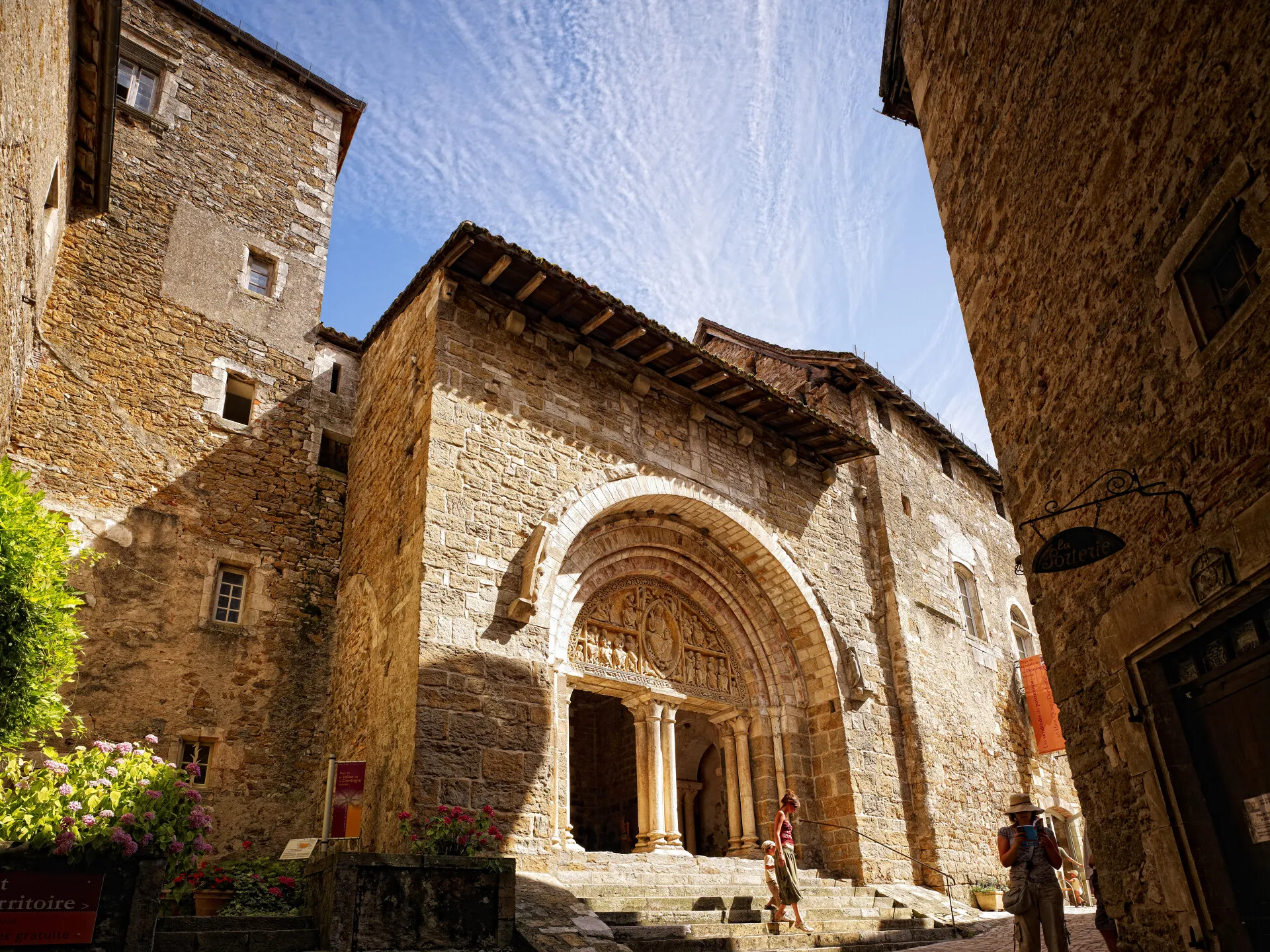
Au pied des falaises du causse de Gramat, baigné par les eaux de la Dordogne, le bourg monastique de Carennac s’est développé autour d’un prieuré clunisien fondé au milieu du 11ème siècle. Célèbre pour son tympan roman et sa Mise au tombeau gothique, l’église Saint-Pierre, édifiée à la fin du 11ème siècle, se trouve au centre de l’ensemble monastique. Le portail de l’église primitive porte des chapiteaux sculptés ornés d’animaux fantastiques, de palmettes et d’entrelacs. Le porche, élevé devant cette façade, offre un tympan sculpté représentant le Christ en majesté dans une mandorle entouré par le Tétramorphe (l’ange, l’aigle, le lion, le taureau) et par les apôtres.
English
At the foot of the cliffs of the Causse de Gramat, bathed by the waters of the Dordogne, the monastic village of Carennac developed around a Cluniac priory founded in the middle of the 11th century. Famous for its Romanesque tympanum and its Gothic Entombment, the church of Saint-Pierre, built at the end of the 11th century, is at the centre of the monastic complex. The portal of the primitive church bears carved capitals decorated with fantastic animals, palmettes and interlacing. The porch, raised in front of this façade, offers a sculpted tympanum representing Christ in majesty in a mandorla surrounded by the Tetramorph (the angel, the eagle, the lion, the bull) and by the apostles.
Deutsch
Am Fuße der Felsen des Causse de Gramat, umspült vom Wasser der Dordogne, entwickelte sich die Klostersiedlung Carennac um ein in der Mitte des 11. Jahrhunderts gegründetes Cluniazenserpriorat herum. Die für ihr romanisches Tympanon und ihre gotische Grablegung berühmte Kirche Saint-Pierre, die Ende des 11. Jahrhunderts errichtet wurde, befindet sich im Zentrum des Klosterkomplexes. Das Portal der ursprünglichen Kirche trägt geschnitzte Kapitelle, die mit fantastischen Tieren, Palmetten und Flechtwerk verziert sind. Die vor dieser Fassade errichtete Vorhalle bietet ein geschnitztes Tympanon, das den majestätischen Christus in einer Mandorla darstellt, umgeben von dem Tetramorph (Engel, Adler, Löwe, Stier) und den Aposteln.
Dutch
Aan de voet van de kliffen van de Causse de Gramat, badend in het water van de Dordogne, heeft het kloosterdorp Carennac zich ontwikkeld rond een Cluniacus priorij die in het midden van de 11e eeuw werd gesticht. De kerk Saint-Pierre, beroemd om zijn romaanse timpaan en zijn gotische grafsteen, gebouwd aan het einde van de 11e eeuw, vormt het centrum van het kloostercomplex. Het portaal van de oorspronkelijke kerk heeft gebeeldhouwde kapitelen versierd met fantastische dieren, palmetten en vlechtwerk. Het voor deze gevel verhoogde portaal heeft een gebeeldhouwd timpaan dat Christus in majesteit voorstelt in een mandorla, omringd door de Tetramorf (engel, adelaar, leeuw, stier) en de apostelen.
Español
Al pie de los acantilados del Causse de Gramat, bañado por las aguas de la Dordoña, el pueblo monástico de Carennac se desarrolló en torno a un priorato cluniacense fundado a mediados del siglo XI. Famosa por su tímpano románico y su lápida gótica, la iglesia de Saint-Pierre, construida a finales del siglo XI, se encuentra en el centro del complejo monástico. El portal de la iglesia original tiene capiteles tallados con animales fantásticos, palmetas y nudos. El pórtico, levantado delante de esta fachada, ofrece un tímpano esculpido que representa a Cristo en majestad en una mandorla rodeado por el Tetramorfo (ángel, águila, león, toro) y por los apóstoles.
Italiano
Ai piedi delle falesie della Causse de Gramat, bagnato dalle acque della Dordogna, il villaggio monastico di Carennac si è sviluppato attorno a un priorato cluniacense fondato a metà dell'XI secolo. Famosa per il suo timpano romanico e la sua lapide gotica, la chiesa di Saint-Pierre, costruita alla fine dell'XI secolo, è al centro del complesso monastico. Il portale della chiesa originaria presenta capitelli scolpiti con animali fantastici, palmette e nodi. Il portico, innalzato davanti a questa facciata, offre un timpano scolpito che rappresenta Cristo in maestà in una mandorla circondato dal Tetramorfo (angelo, aquila, leone, toro) e dagli apostoli.
Cour du Prieuré, 46110 Carennac
Crédits: CC-BY-NC


