Eglise de Loubéjac – Loubejac
Description
English
Deutsch
Dutch
Español
Italiano
Description
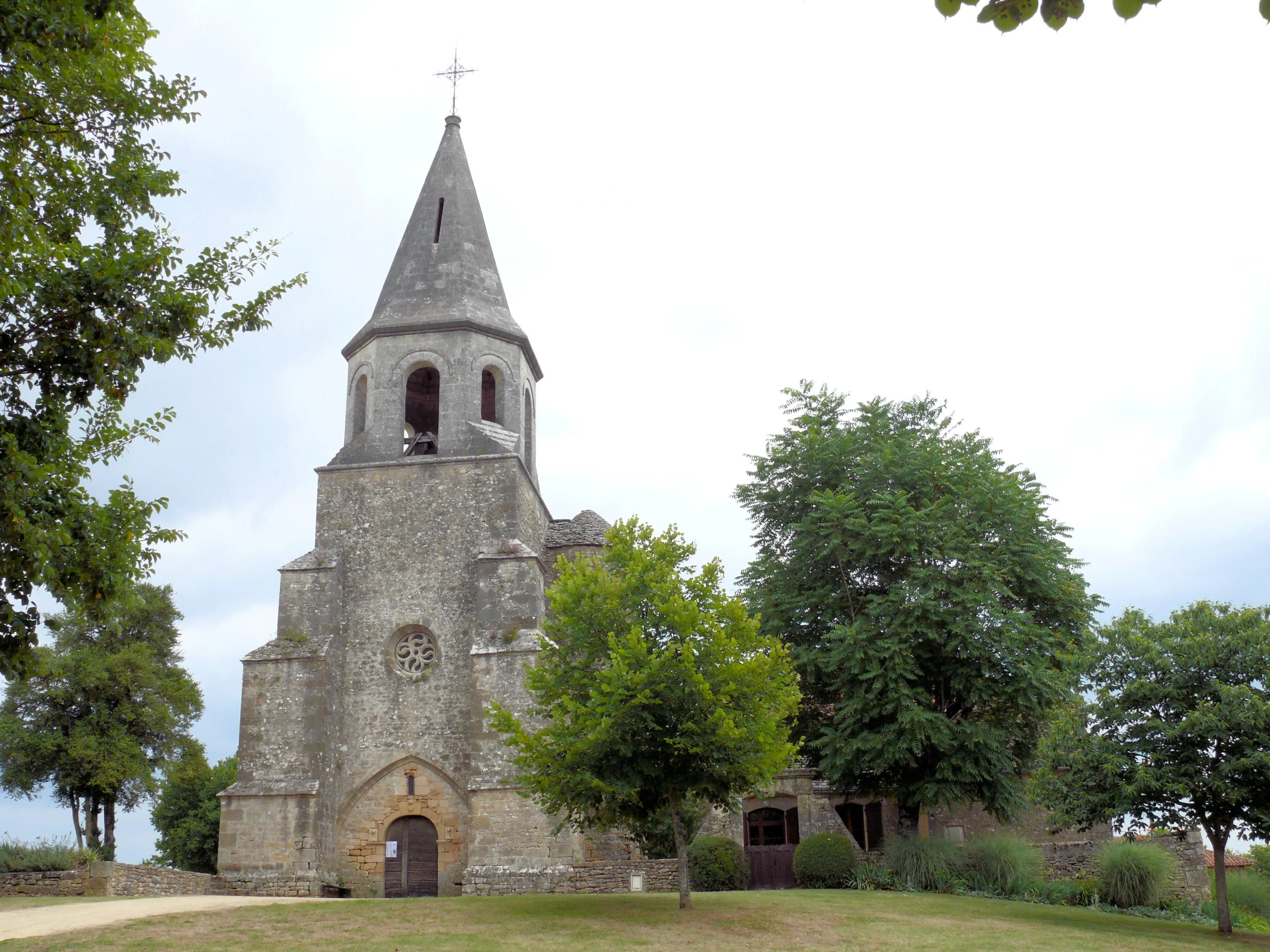
Cette commune est la plus méridionale du département de la Dordogne. Elle fut occupé des la préhistoire. Son église est en partie romane (XIIème siècle), et en partie gothique (XVe et XVIe siècles). Vous y trouverez calme et tranquilité dans un cadre typiquement périgourdin propice aux promenades.
English
This is the most southern village of the Dordogne department. It was occupied in prehistorical time. Its church is partly Romanesque (12th century), and partly Gothic (15th and 16th centuries). Peace and tranquility is to be found in this typical Perigord setting great for walks.
Deutsch
Diese Gemeinde ist die südlichste des Departements Dordogne. Sie war bereits in der Vorgeschichte besiedelt. Die Kirche ist teils romanisch (12. Jahrhundert), teils gotisch (15. und 16. Jahrhundert). Hier finden Sie Ruhe und Frieden in einer typisch perigourdinischen Umgebung, die zu Spaziergängen einlädt.
Dutch
Dit is de meest zuidelijke gemeente van het departement Dordogne. Het is bewoond sinds de prehistorie. De kerk is deels romaans (12e eeuw) en deels gotisch (15e en 16e eeuw). U vindt er rust en stilte in een typisch Perigordiaanse omgeving die geschikt is voor wandelingen.
Español
Este pueblo es el más meridional del departamento de Dordoña. Fue ocupado por la prehistoria. Su iglesia es en parte románica (siglo XII), y en parte gótica (siglos XV y XVI). Encontrará calma y tranquilidad en un entorno típicamente perigord propicio para pasear.
Italiano
È il comune più meridionale del dipartimento della Dordogna. È stata occupata fin dalla preistoria. La sua chiesa è in parte romanica (XII secolo) e in parte gotica (XV e XVI secolo). Troverete pace e tranquillità in un ambiente tipicamente perigordino adatto alle passeggiate.
, 24550 Loubejac